
Flat Roof Repair
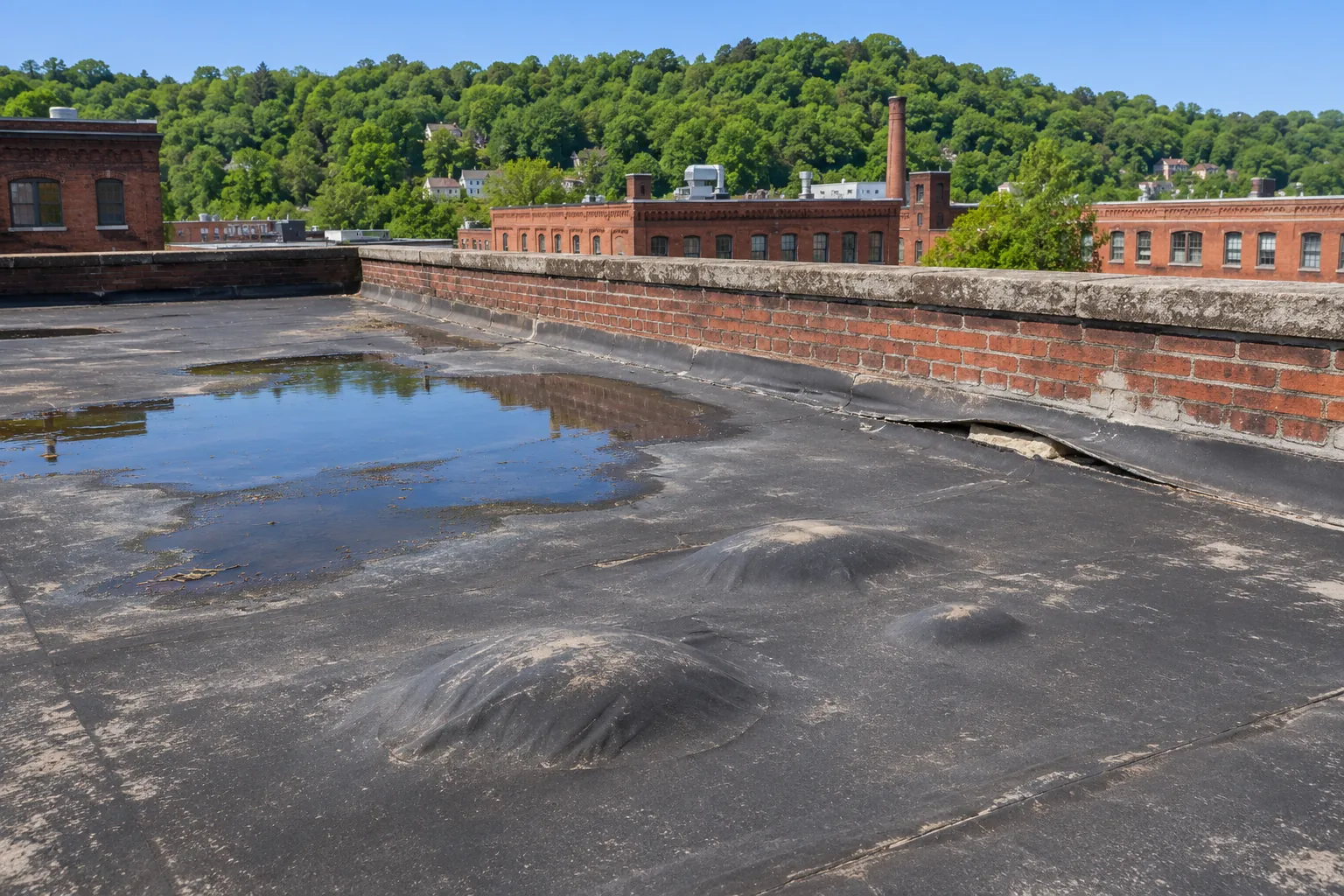
Flat decks behind storefront parapets get seam, puncture, and blister repairs with matching membrane and clear scuppers.
Flat roof repair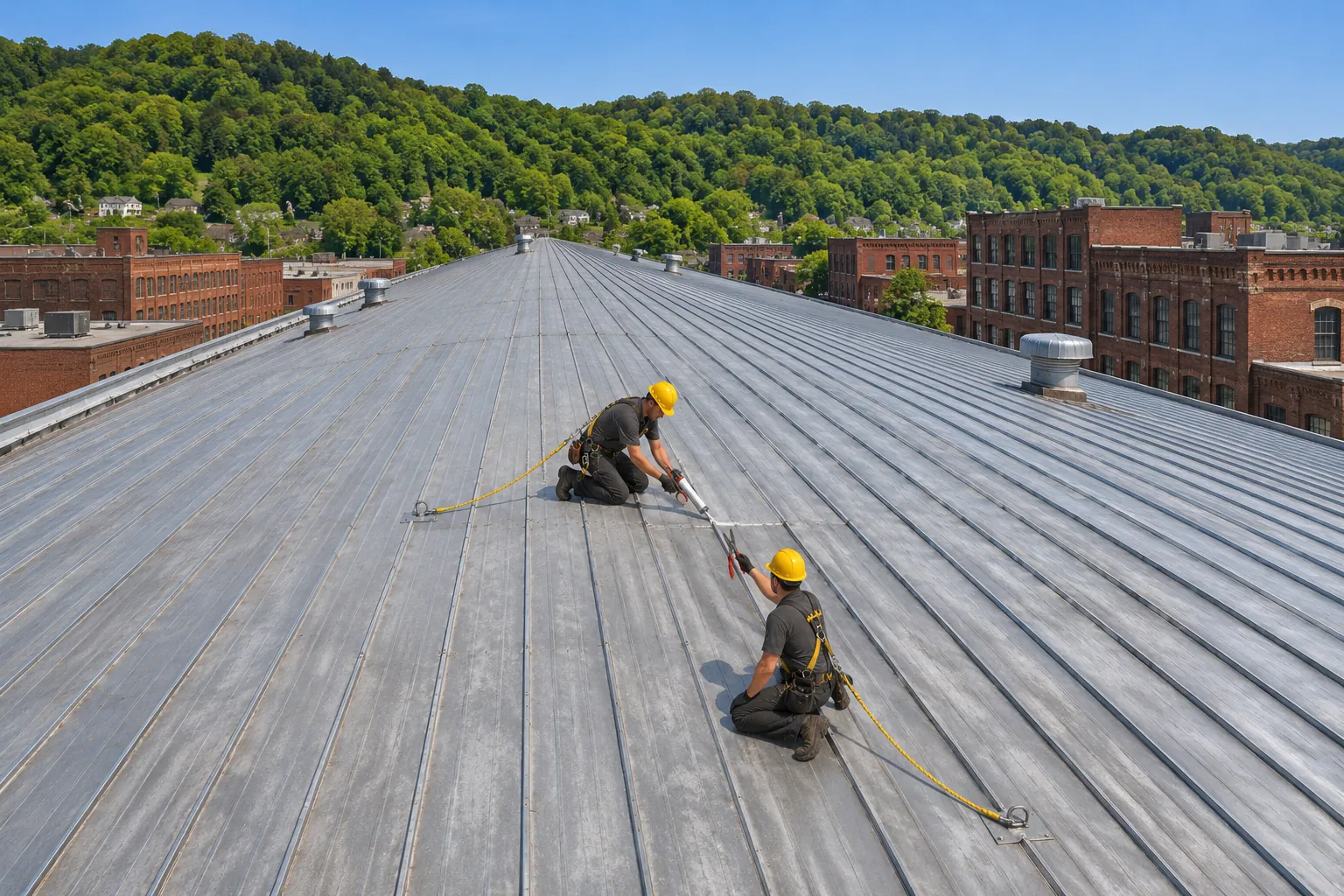
Newport, KY
As a Newport commercial roof repair contractor, we repair leaks, flashing, and worn sections on storefronts, offices, and older commercial blocks across the city.
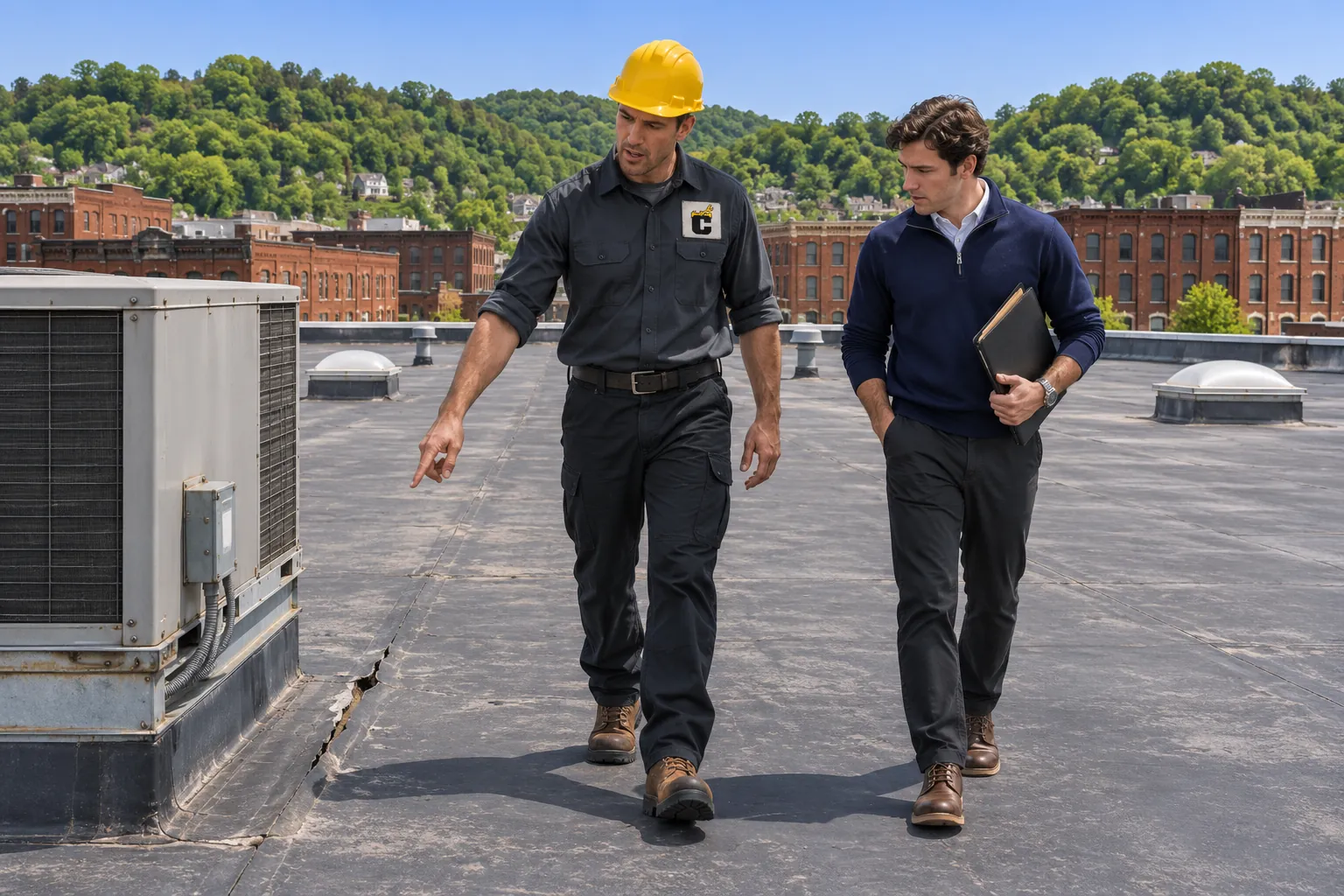
Newport runs its own building inspector, separate from the Campbell County office serving nearby cities, so a Newport commercial roof repair contractor checks the city’s building permit FAQs before larger work starts.
Patches and reflashing that change nothing visible stay simple. Work on roofs seen from the street in Newport’s historic districts goes through the city’s Certificate of Appropriateness process first.
Older brick blocks and newer storefronts leak in different places. These pairs cover the ones we see most in the city.
Damp plaster appears where two attached buildings share a wall.
Water enters a cap joint, travels down inside the masonry, and shows up floors below.
Water runs out above the display window during heavy rain.
A blocked scupper through the parapet backs water over the edge and down the facade.
Tiles darken under the rooftop unit serving a rear office.
Membrane at the curb corners has split from years of service traffic around the unit.
Repairs sized to the damage keep older Newport roofs working without a review process for work nobody sees.
Sealed cap joints and new counterflashing keep water out of brick walls that are slow to dry.
Spot repairs leave visible trim and edge profiles as they are, which keeps street-facing work small.
Roof work is staged from the back or the roof hatch, so customers still use the front door.
Offices over shops stay dry once the cap or curb above them is fixed.
A written scope with membrane square footage and curb details answers the inspector’s first questions.
Photos of each fix help when an owner later weighs a bigger project on a historic building.
Each service fits a different kind of Newport roof, from flat storefront decks to metal shop buildings.
Flat decks behind storefront parapets get seam, puncture, and blister repairs with matching membrane and clear scuppers.
Flat roof repair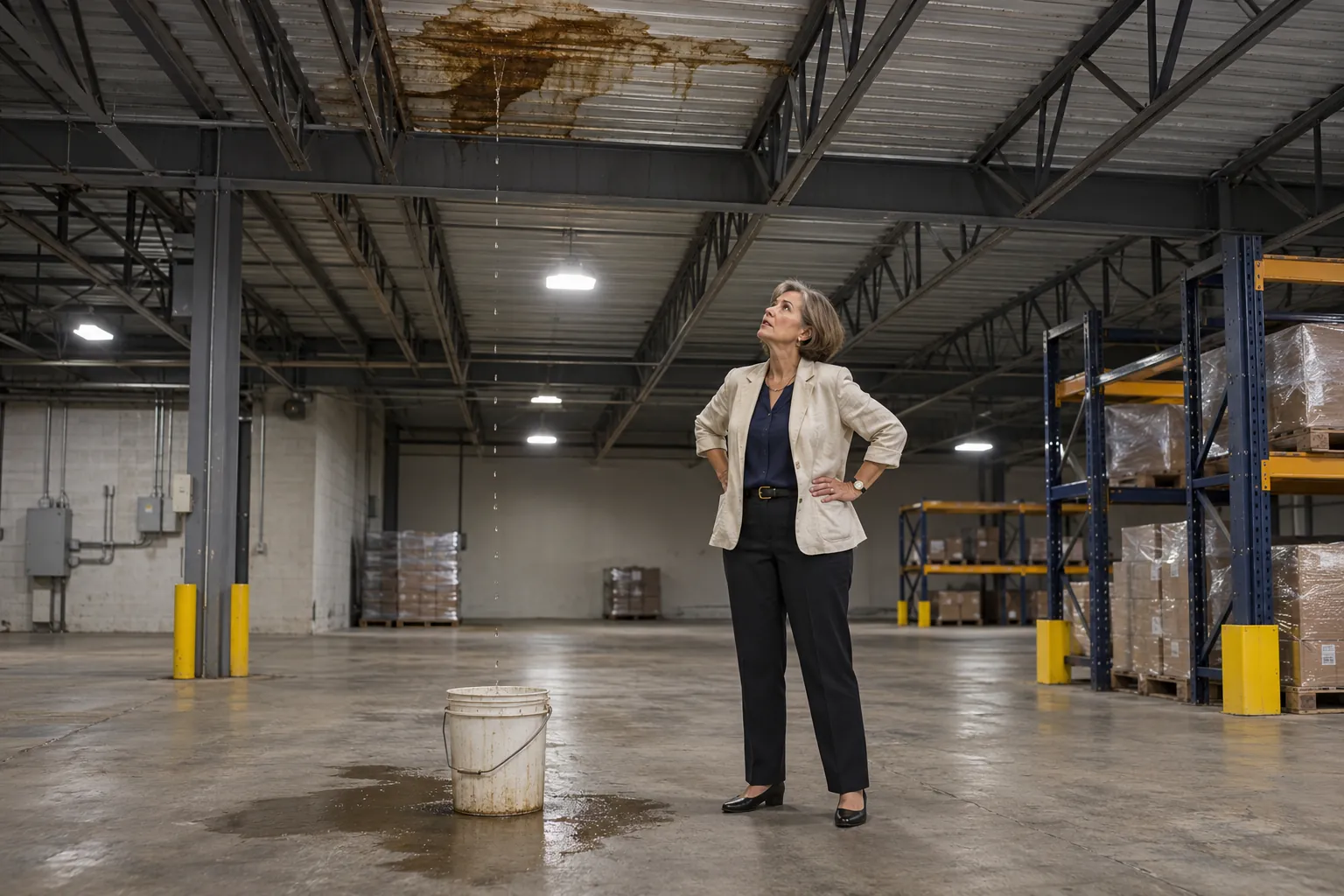
Metal service buildings and garages get oversized screws, resealed laps, and rust repair along their panel runs.
Metal roof repair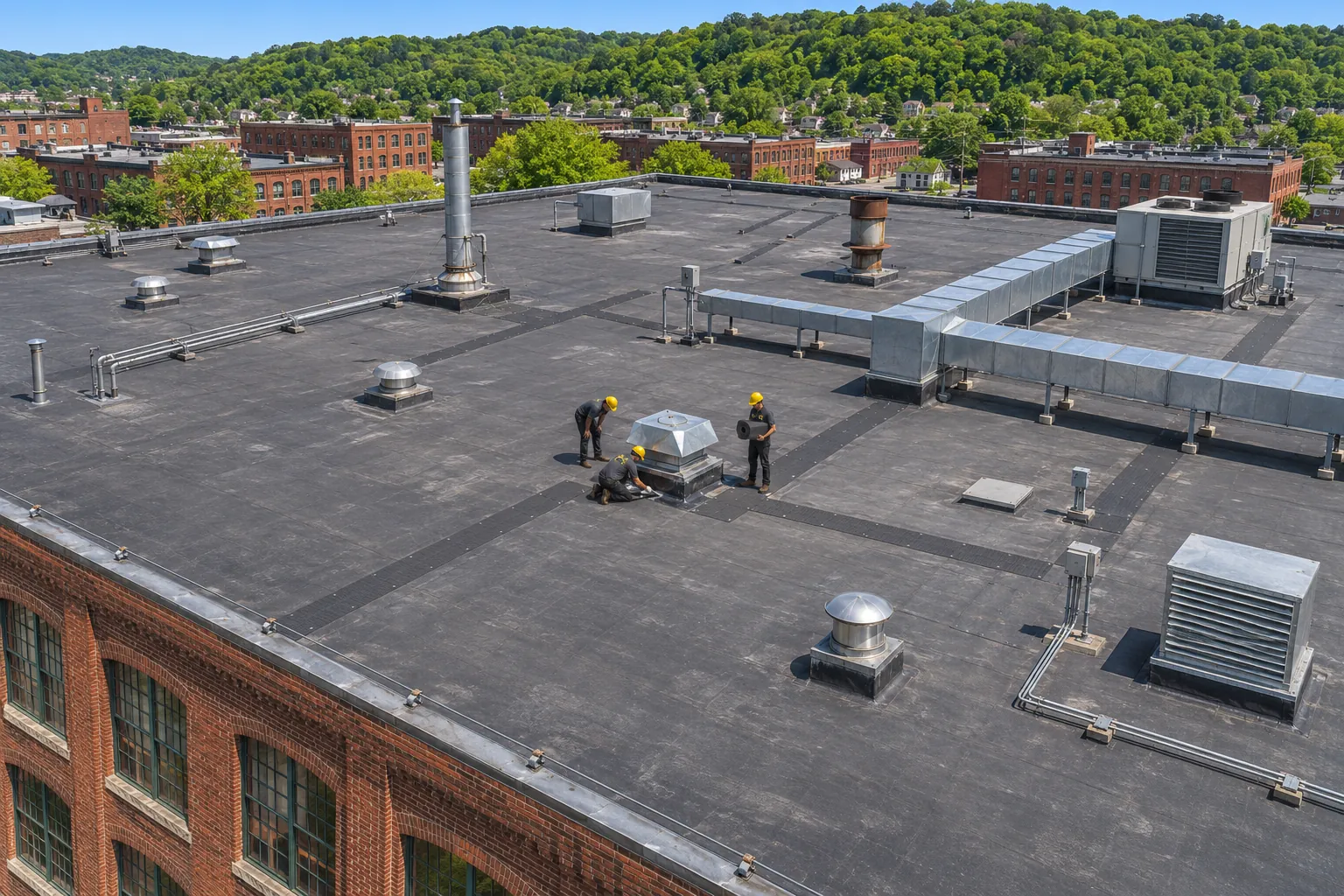
Leaks that travel through masonry get traced from the stain back to the cap, curb, or scupper letting water in.
Leak repair
Larger warehouse and production roofs get grid inspections and repairs planned around their working hours.
Industrial roof repairThat usually starts at a parapet cap or scupper. Call and tell us which wall and which floor, and we will check the roof edge above it.
Four decisions take a Newport repair from first call to finished work.
Caps, scuppers, curbs, and seams are checked above the damage, and we note anything visible from the street.
Square footage, curb or drain changes, and any structural work decide whether the city inspector needs a permit.
Work that changes a roof seen from the street in a historic district goes through the Certificate of Appropriateness first.
Matching membrane or flashing goes on, nearby details get a look, and photos of the fix go into your building file.
Is your property close to Newport? We repair commercial roofs across these towns; anywhere else, call us or send us a message.
Owners of Newport buildings ask these before repair work starts.
Most Asked
The City of Newport’s own building inspector, separate from the Campbell County office serving several nearby cities. The city posts building permit FAQs for checking whether a job needs one. Have the square footage, any curb or drain changes, structural work, and lift placement ready. Visible roofs in historic districts go through the Certificate of Appropriateness process first.
Yes, though water in masonry travels before it shows. Parapet caps, scuppers through the wall, and base flashing are checked first, and the wall face and cap are water tested separately. When the cap tests dry and the wall still leaks, open mortar joints are the likely path, and that work goes to a mason.
Rarely. Most flat roofs on Newport storefronts are reached through a roof hatch, a rear alley, or a lift set at the back, which keeps sidewalks and front doors clear. Lift placement on a street or sidewalk is worth mentioning to the city when asking about permits.
Spot repairs rarely change anything visible. Patches on flat roofs behind a parapet sit out of sight from below, and edge or cap repairs use matching profiles. When visible trim or roofing has to change on a historic building, that change goes through the city review before work starts.
Split membrane at curb corners, counterflashing pulled from the curb, and shrunken pitch pans around pipes added over the years. Older buildings often carry several generations of penetrations, so each one gets checked. Some drips come from the unit itself, such as a clogged condensate pan or a loose drain line.
Clear a path to the roof hatch or ladder, note where and when water appears inside, and let tenants near the work area know the day. Photos of the stain and the weather on the day it leaked help the repair crew start at the right spot on the roof.
Tell us the building type and where water shows up, and we will set up a free roof inspection and estimate in Newport.