
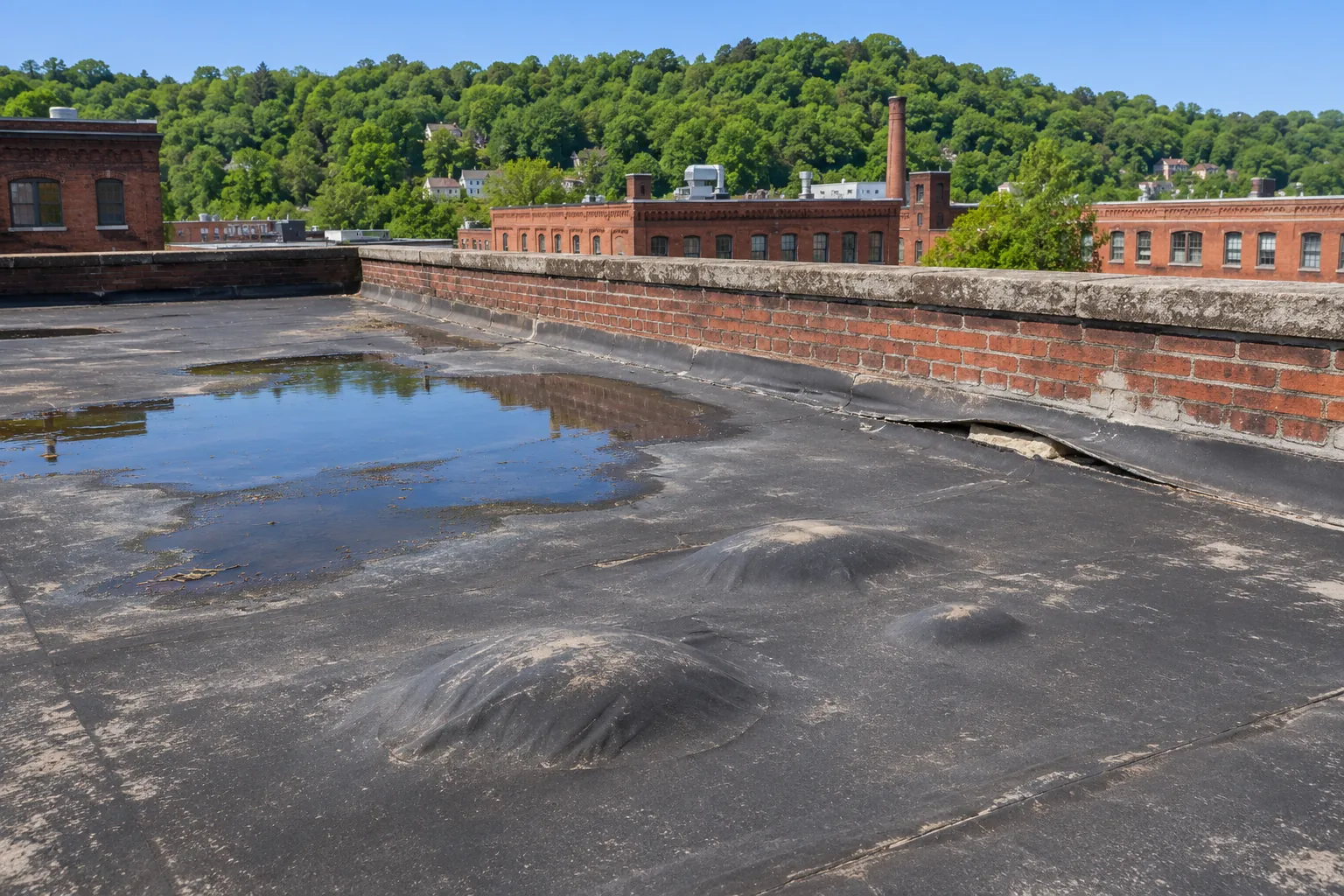
Flat Roof Repair
Parapet flashing and cap joints facing the slope get resealed, and seams near overloaded drains are repaired.
Flat roof repair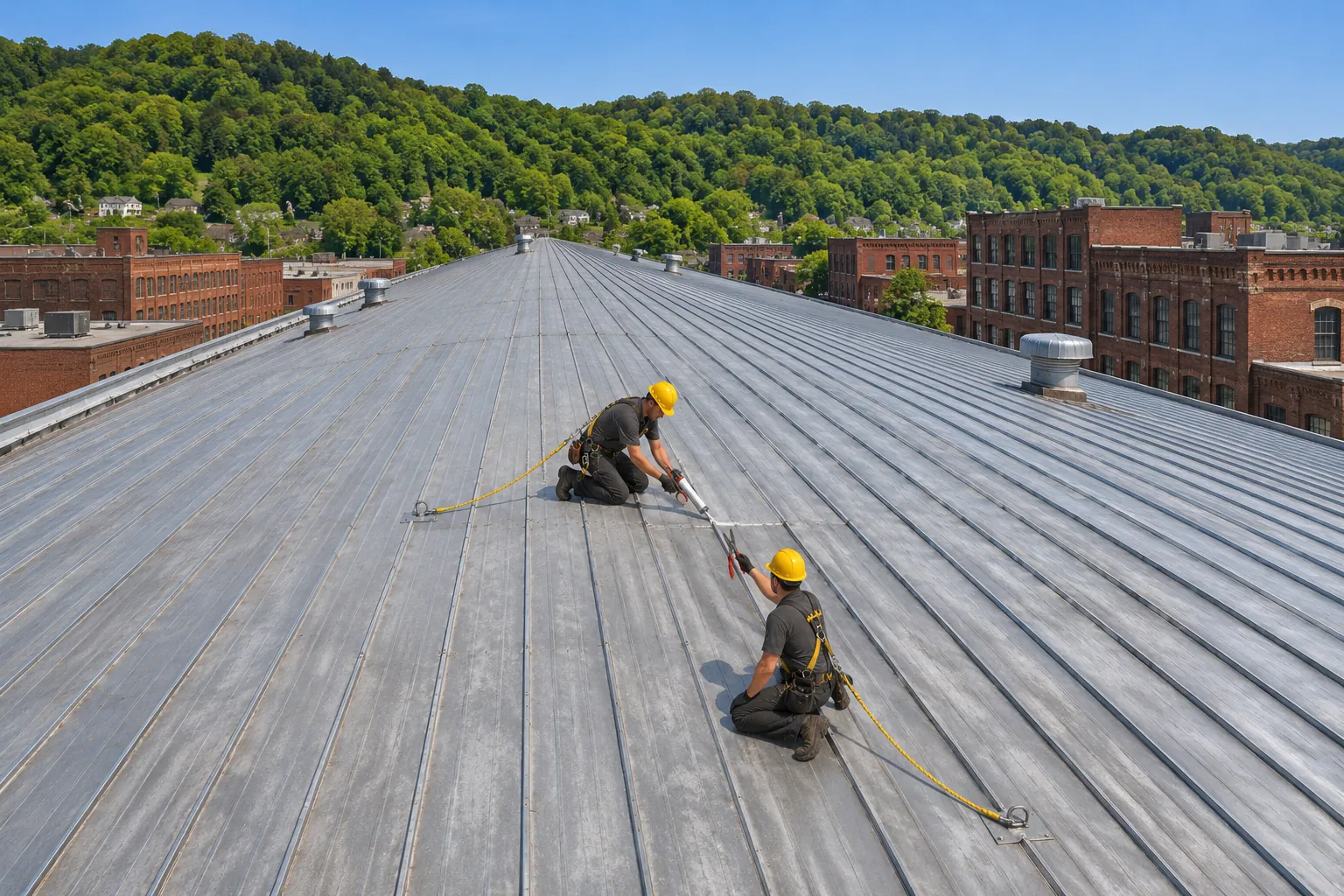
Fort Wright, KY
As a Fort Wright commercial roof repair contractor, we refasten wind-loosened trim, reseal coping joints, and clear downhill gutters on hillside business buildings.
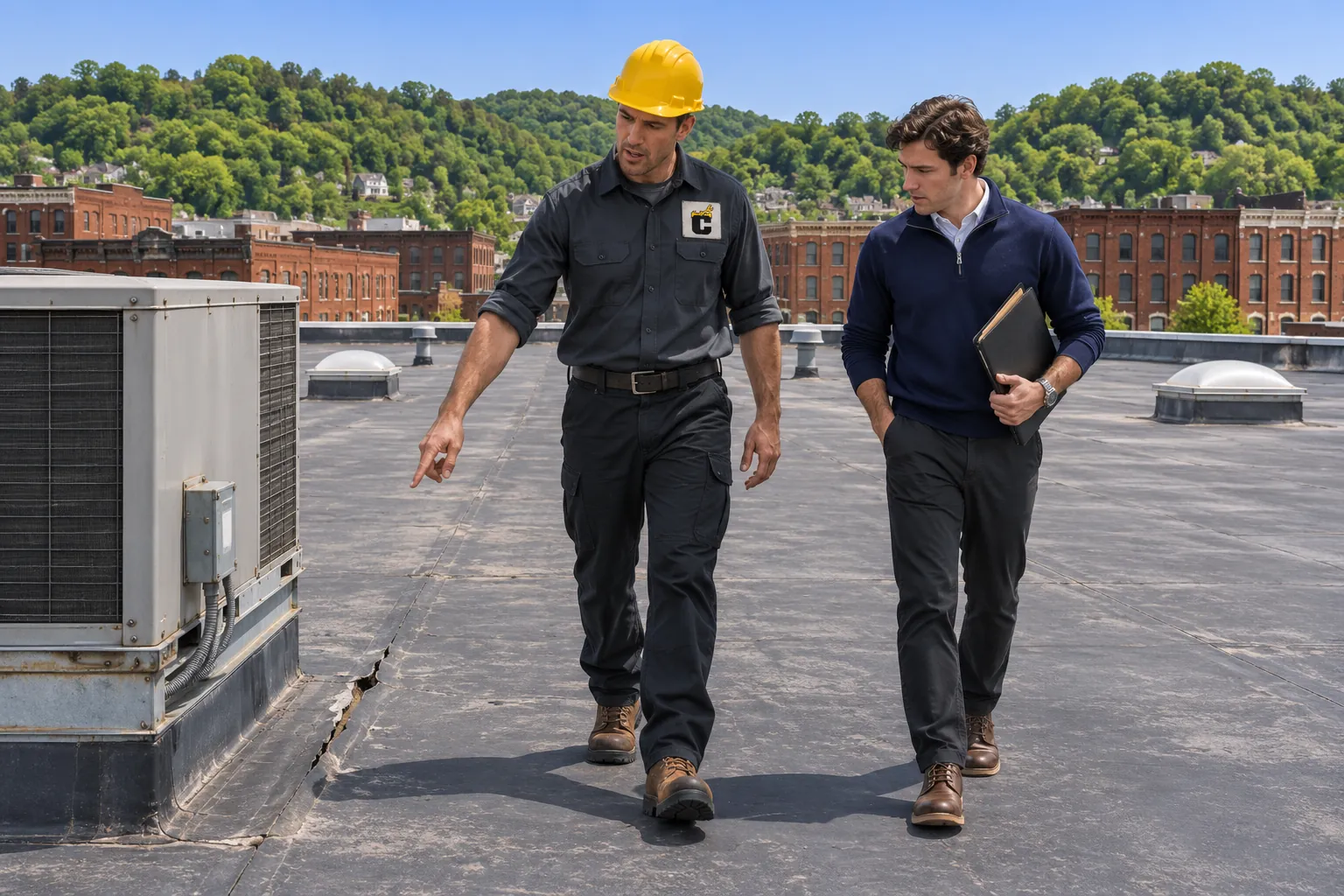
Commercial buildings on Fort Wright hillsides catch wind on one face and runoff on the other, and a Fort Wright commercial roof repair contractor plans around both.
Fort Wright city offices handle zoning ahead of PDS, which permits roof work. On the state’s Kenton County sheet the city appears as “Ft Wright,” so search both spellings.
Slope and wind shape where these roofs leak. These pairs show the patterns.
Something taps or rattles along the roof edge in gusts.
Trim fasteners have backed out, and the trim lifts with each gust.
A stain forms near the ceiling on the wall facing the hill.
A cap joint on the slope-facing parapet has opened, letting rain into the wall.
Water spills over the downhill gutter in moderate rain.
More of the roof drains to the low side than its outlets can handle.
Repairs aimed at the windward face and the downhill edge handle the two forces that wear these roofs.
Refastened ridge caps and rake trim stop moving, so the joints beneath stay sealed.
Sealed cap joints keep rain out of walls on the slope-facing side.
Closing the cap joint ends the stains high on the hill-facing wall.
Clearing and adding outlets on the downhill side keeps water off lower walks.
Windward and downhill roof work is scheduled together in one visit.
City zoning, then PDS, is sorted before any scope that needs a permit.
Each service adapts to buildings set on a slope in Fort Wright.
Parapet flashing and cap joints facing the slope get resealed, and seams near overloaded drains are repaired.
Flat roof repair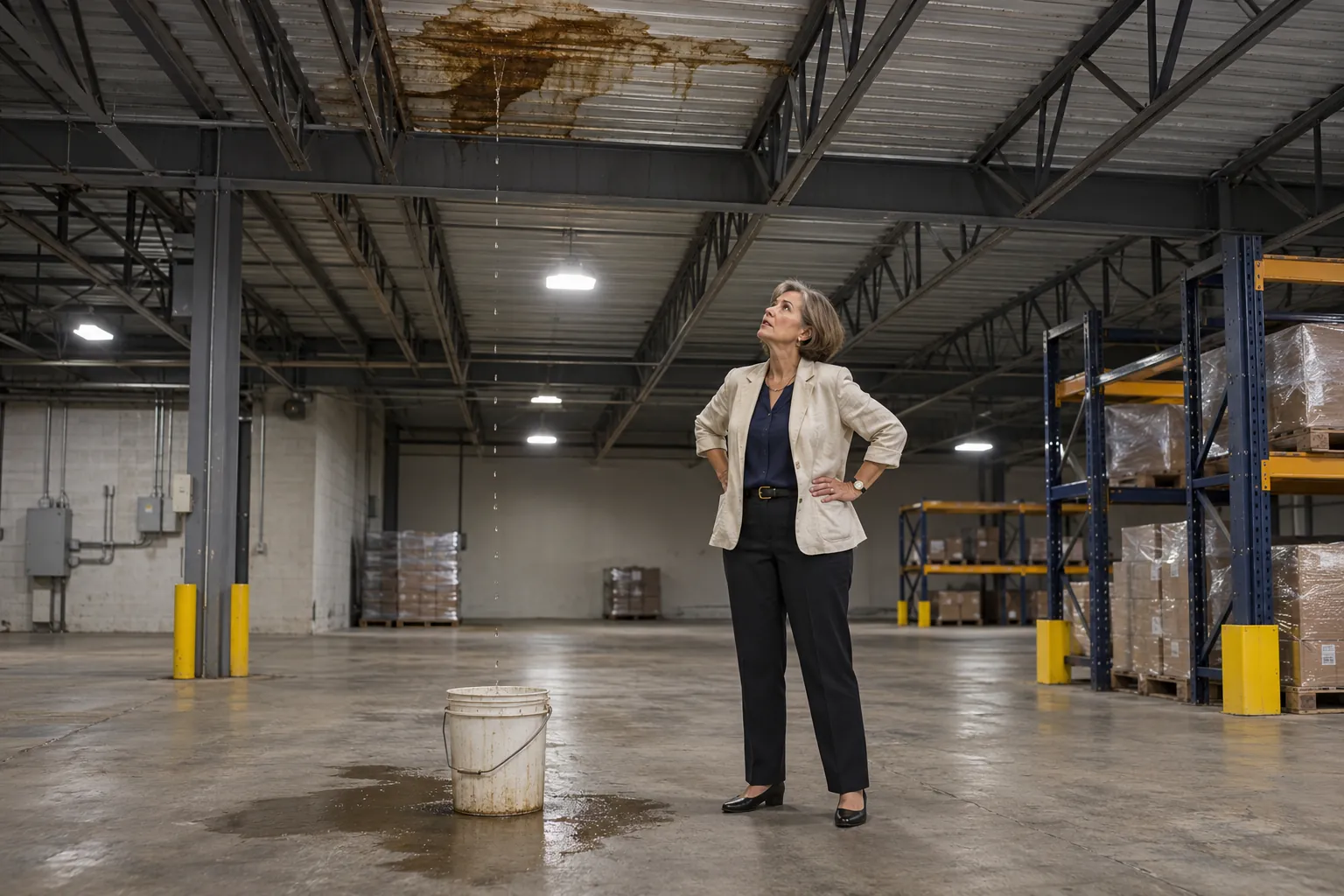
Ridge caps and rake trim are refastened with new screws, and loosened panel screws are replaced with oversized ones.
Metal roof repair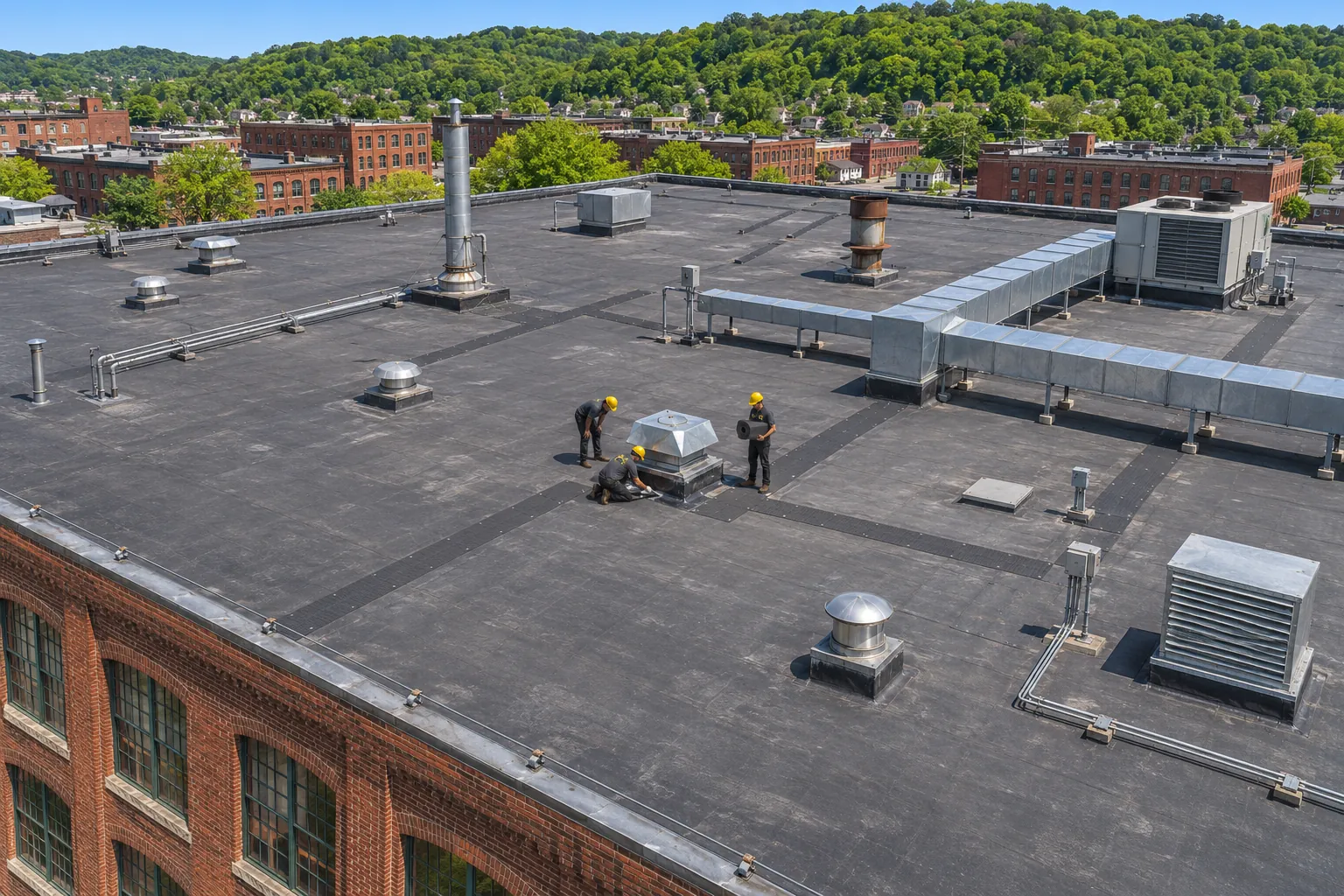
Wall stains on the hill side get traced to the cap, joint, or flashing letting in wind-driven rain.
Leak repair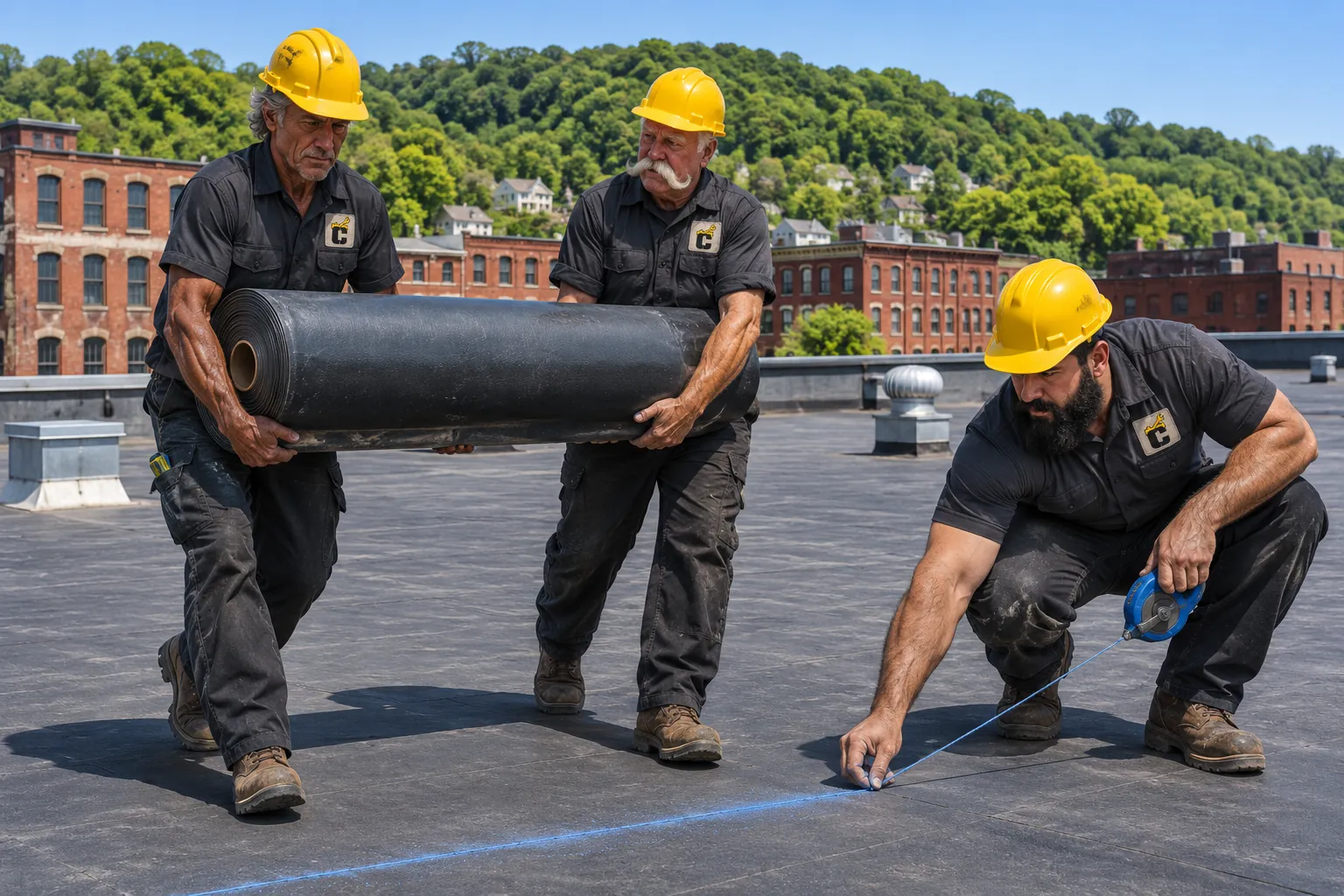
Larger buildings get outlet capacity checked on the low side and edges secured on the exposed face.
Industrial roof repairLoose trim leads to open joints. Call and tell us which side of the building it is on and what you hear.
Four decisions organize repairs on a hillside building.
Ridge caps, rake trim, coping joints, and gutters are checked, with the windward and downhill sides looked at closely.
Work that changes roof area, deck, or equipment goes to city zoning and then PDS before it starts.
Trim and caps on the wind-facing side get new fasteners and sealed joints.
Downhill gutters are cleared, rehung, and given added outlets where runoff gathers.
Is your hillside building in Fort Wright or a town nearby? We take commercial roof repairs in all of the places listed; for a property outside them, call us or send us a message.
Questions about wind, runoff, and permits in Fort Wright.
Most Asked
Planning and Development Services of Kenton County permits the roof work, and on the state’s Kenton County sheet the city is abbreviated “Ft Wright,” so search for both spellings. Fort Wright city offices handle zoning ahead of PDS. When calling, describe whether the repair changes any roof area, deck, or equipment.
Wind across an exposed slope works on trim fasteners every gust, and daily heating and cooling of metal adds to it. Once a fastener backs out, the trim moves more, and the joint under it opens. Refastening with new screws fixes it before the trim lifts away.
Old sealant is cut out, the joint is cleaned, and new sealant or a joint cover goes on, with loose cleats refastened. The flashing under the cap gets checked, since water entering at the joint often damages it first, and any split is patched before the cap is closed up.
Clearing outlets, adding a downspout partway along long runs, and rehanging any sagging sections. Extending downspouts away from the lower walls keeps that runoff from pooling at entrances, and the gutter seams are sealed while the run is being reset.
It usually means loose trim, a lifted cap, or a flapping piece of flashing. Each of those opens a path for wind-driven rain, so it is worth a check before the next storm. Stay off the roof and describe where the sound comes from when you call.
They need the same materials, but they get checked more often. Wind-driven rain hits the slope-facing side harder, so cap joints, counterflashing, and the base of the parapet there are the first details looked at on each visit.
A check after every major windstorm is worth it, along with the usual spring and fall visits. Exposed trim and caps loosen a little at a time, and catching a backed-out fastener early keeps the trim from lifting and tearing the flashing beneath it.
Tell us which side of the building leaks or rattles, and we will set up a free roof inspection and estimate.