
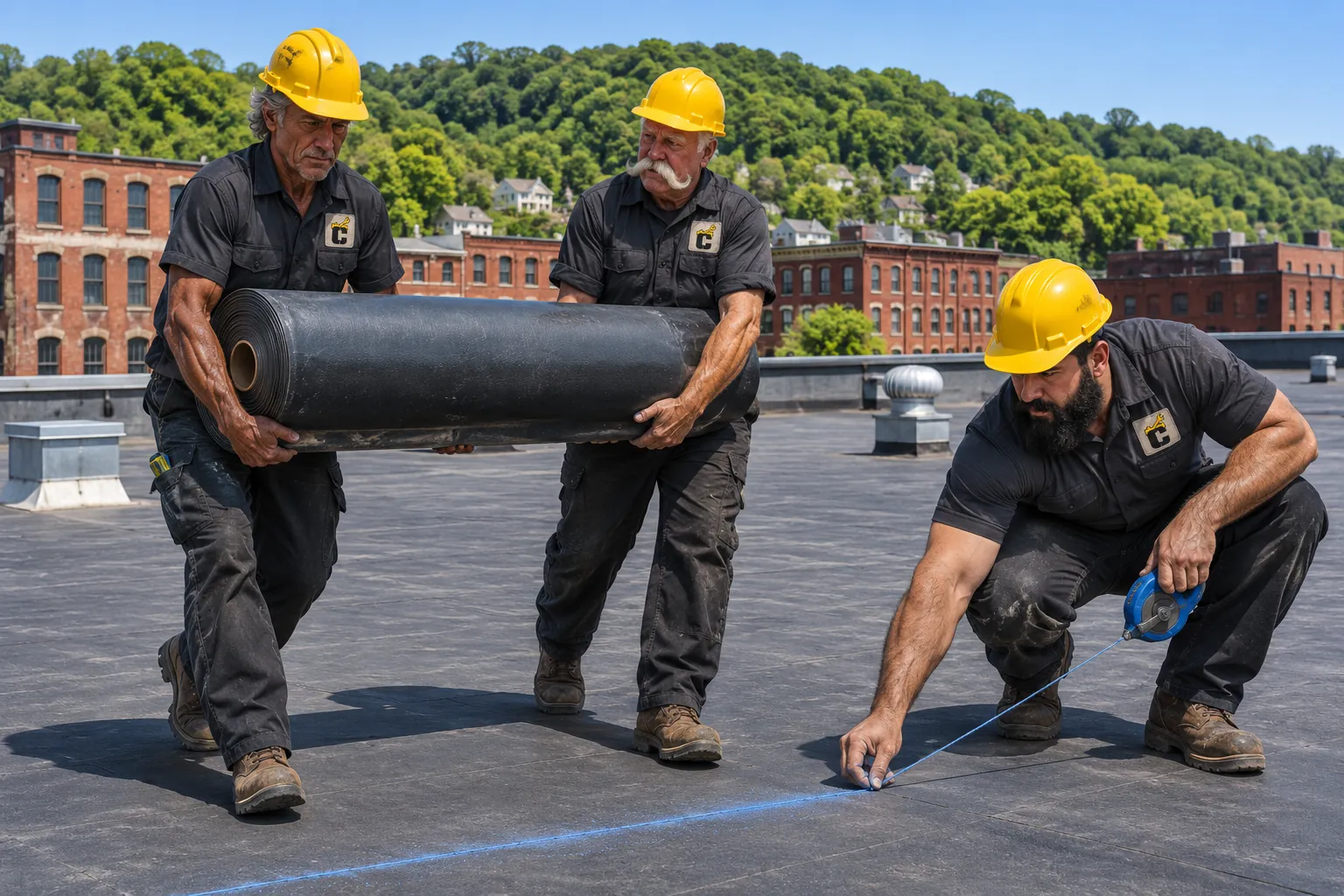
Grease And Exhaust Damage
Softened membrane is cut out and replaced with a sheet rated for that exposure, then containment boxes, taller stacks, or sacrificial pads deal with the source.
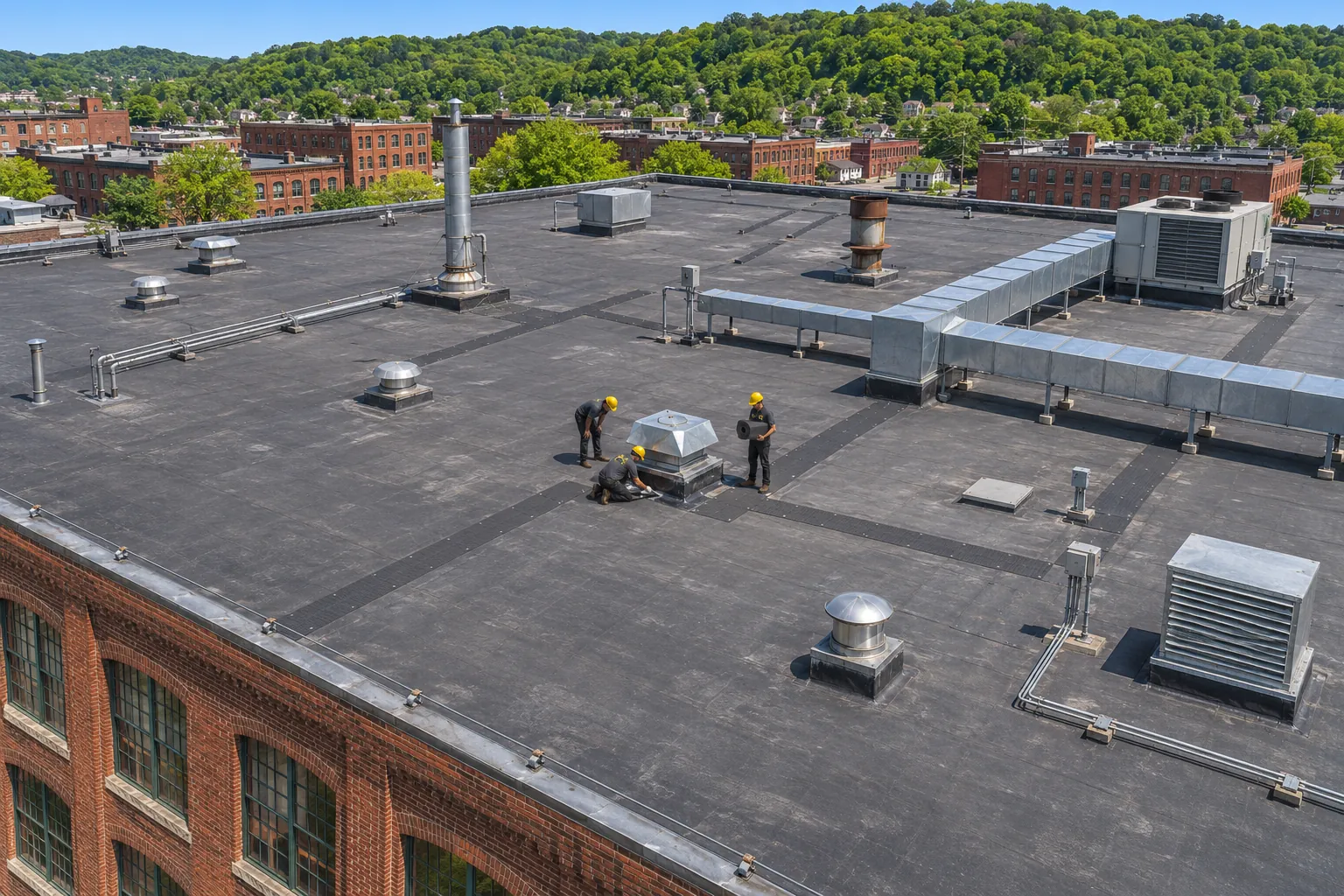
Industrial Roof Repair
As a Covington industrial roof repair contractor, we repair plant and warehouse roofs around shifts, shutdowns, and safety rules, from grease-damaged membrane to drains and expansion joints.
A Covington industrial roof repair contractor sorts defects by urgency before planning the work. These priorities come from a section-by-section walk.
| Priority | What Gets Found | How It Is Handled |
|---|---|---|
| Urgent | Active leaks over equipment, open seams, missing caps | Repaired right away |
| Soon | Cracked pitch pans, loose fasteners, clogged drains | A planned repair visit |
| Monitor | Small blisters and minor surface wear | Rechecked at the next inspection |
| Roof-wide | Wet insulation growing on each scan | Restoration or replacement planning |
Plants and warehouses wear their roofs in specific ways. These pairs tie what the floor sees to the roof detail behind it.
Drips land on conveyors, electrical panels, or stored goods under a long roof bay.
Missing bolts let the membrane pull from the ring, and water slips into the drain body.
Staff see staining on the ceiling below kitchen or process exhaust.
Rubber roofs turn gummy around oily exhaust and split once the sheet weakens.
New drips appear along outside walls after high wind or hail.
Wind pulls hardest at corners and perimeter, and hail bruises the cover board under the membrane.
Marks follow a straight line where two building sections meet.
The raised flexible joint that lets the building move has a split bellows or torn flashing.
Industrial repairs fix the damage and, where the cause sits on the roof, the source behind it.
Softened membrane is cut out and replaced with a sheet rated for that exposure, then containment boxes, taller stacks, or sacrificial pads deal with the source.
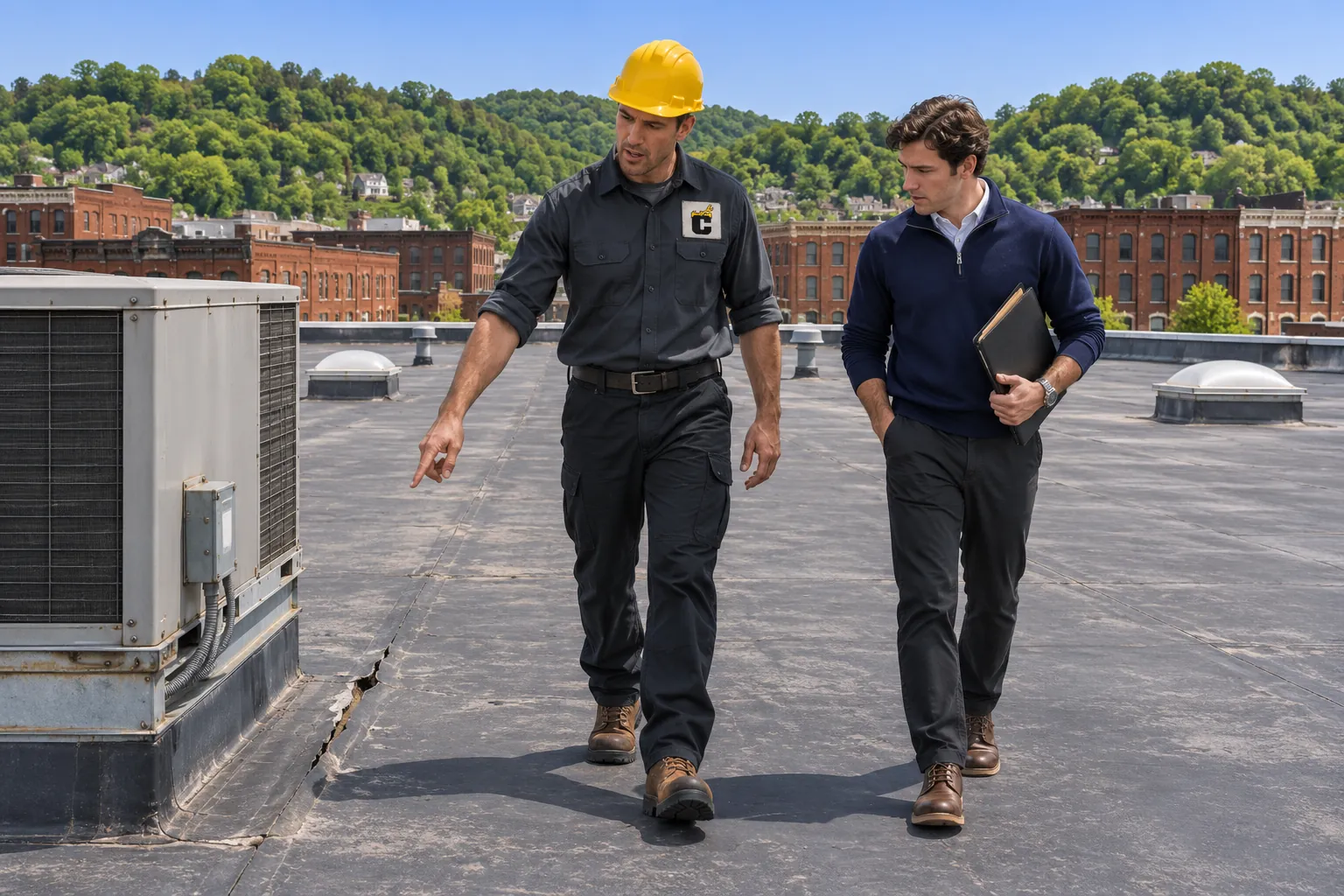
Membrane is reset in the clamping ring with new bolts, cracked bowls get retrofit inserts, and split joint covers are replaced and reflashed.
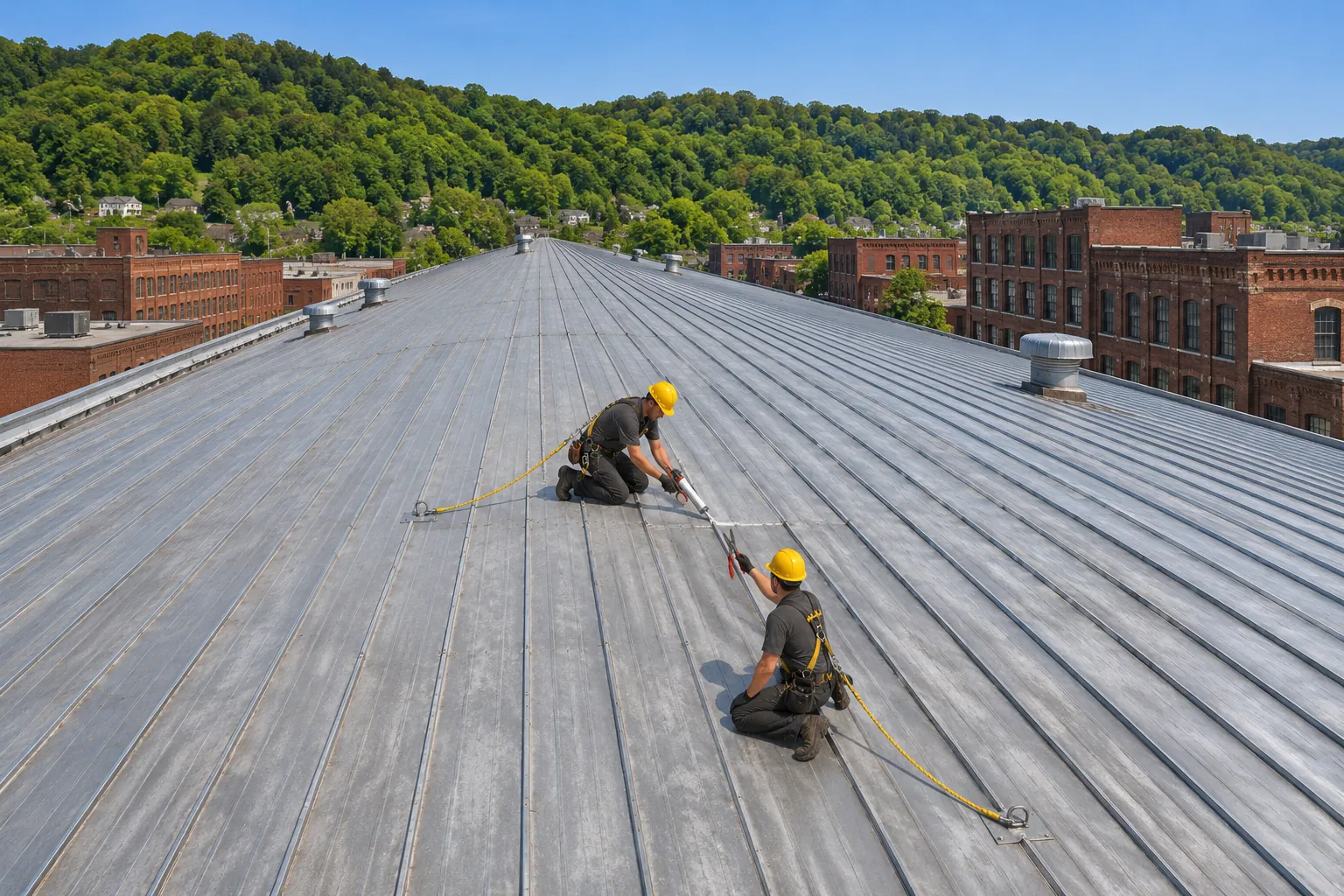
Lifted coping caps and edge metal are refastened, torn membrane is patched, and dented ribs or cracked skylight panels are replaced.
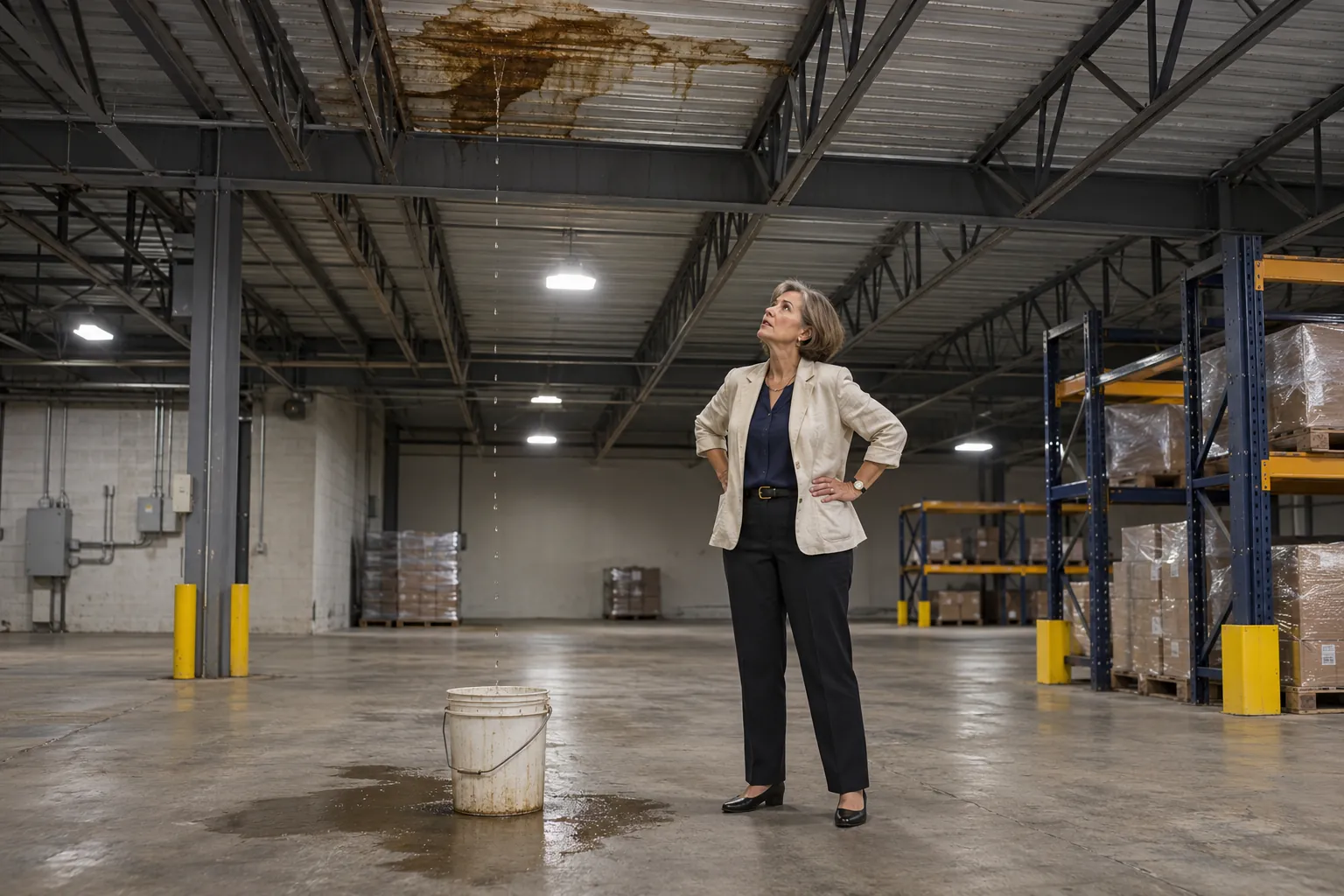
Bays over electrical rooms and production lines are repaired first, with sheeting over equipment wherever the deck is opened.
On a large roof, small repairs done on a schedule keep defects from multiplying across thousands of square feet.
Grid inspections rank every defect, so urgent seams and caps get fixed before minor wear.
Grease boxes and extended stacks stop exhaust damage from returning around the same fan curbs.
Odorous primers are scheduled away from intake hours, and unit shutdowns are limited to their own curb repairs.
Sheeting protects machines and stock under any area where the deck is opened.
Urgent, soon, and monitor lists turn a big roof into a repair plan spread across the year.
Dated photos and receipts from storm repairs support an insurance claim on the roof.
Call with the bay, the equipment underneath, and your plant safety contact, and the repair gets planned around your shifts.
Five decisions keep plant safety, production, and roof work lined up.
The roof is walked on a grid, and each defect is photographed, marked on a roof plan, and given a priority.
Bays over production, electrical rooms, and stored goods are mapped so the roof above them is repaired first, with equipment protected.
Crews check in with plant safety staff, follow hot work permits for any torch or welding, and stay clear of running intakes on the roof.
Damaged membrane, drains, and joints are repaired, and exhaust sources get grease boxes, stacks, or pads.
Spring and fall inspections, plus checks after major storms, keep the roof priority list current and short.
Industrial buildings combine roof types and problems, so these services often join a plant repair.
Membrane roofs over offices and production halls get seam, blister, and puncture repairs with matching sheet.
Metal warehouses get screw, lap, gutter, and panel repairs, one panel run at a time.
Hidden leaks over equipment get traced with infrared and water tests before the deck is opened.
What plant managers and facility staff ask before a roof repair.
Most Asked
Around shifts, shutdowns, and what sits under each part of the roof, with plant safety rules setting the limits. Repair crews check in with safety staff and follow hot work permits for any torch work. Units shut down only for their own curb repairs, odorous primers avoid intake hours, and leaks over electrical rooms or lines go first.
The softened area is cut out and replaced with membrane rated for that exposure, since patching with the same sheet lets the damage return. Then the source gets fixed with grease containment boxes, extended stacks, or sacrificial pads around fan curbs. Rubber roofs turn gummy around oily exhaust, so the patch material is matched to what the plant actually vents.
Section by section on a grid, with each defect photographed, marked on a roof plan, and ranked. Active leaks over equipment, open seams, and missing caps are urgent; cracked pitch pans, loose fasteners, and clogged drains go on a planned visit; small blisters and surface wear get watched. Spring and fall inspections plus post-storm checks keep the list manageable.
After hail or high wind, the roof is checked for lifted edges and coping caps, torn membrane with fastener plates showing, hail bruising felt through the cover board, dented ribs, cracked skylight panels, and drains packed with debris. Corners and perimeters show damage first. Dated photos with locations, plus receipts for temporary repairs, support an insurance claim.
Leaking drains get the membrane reset in the clamping ring, broken bolts or rings replaced, and the strainer and leader cleared; cracked cast iron bowls take a retrofit insert. Expansion joints get new bellows or covers where they split, then fresh flashing. A hose run into each repaired drain confirms the leader flows before the next storm.
Share the roof size, what runs below it, and where the damage is, and we will set up a free industrial roof inspection and estimate.