
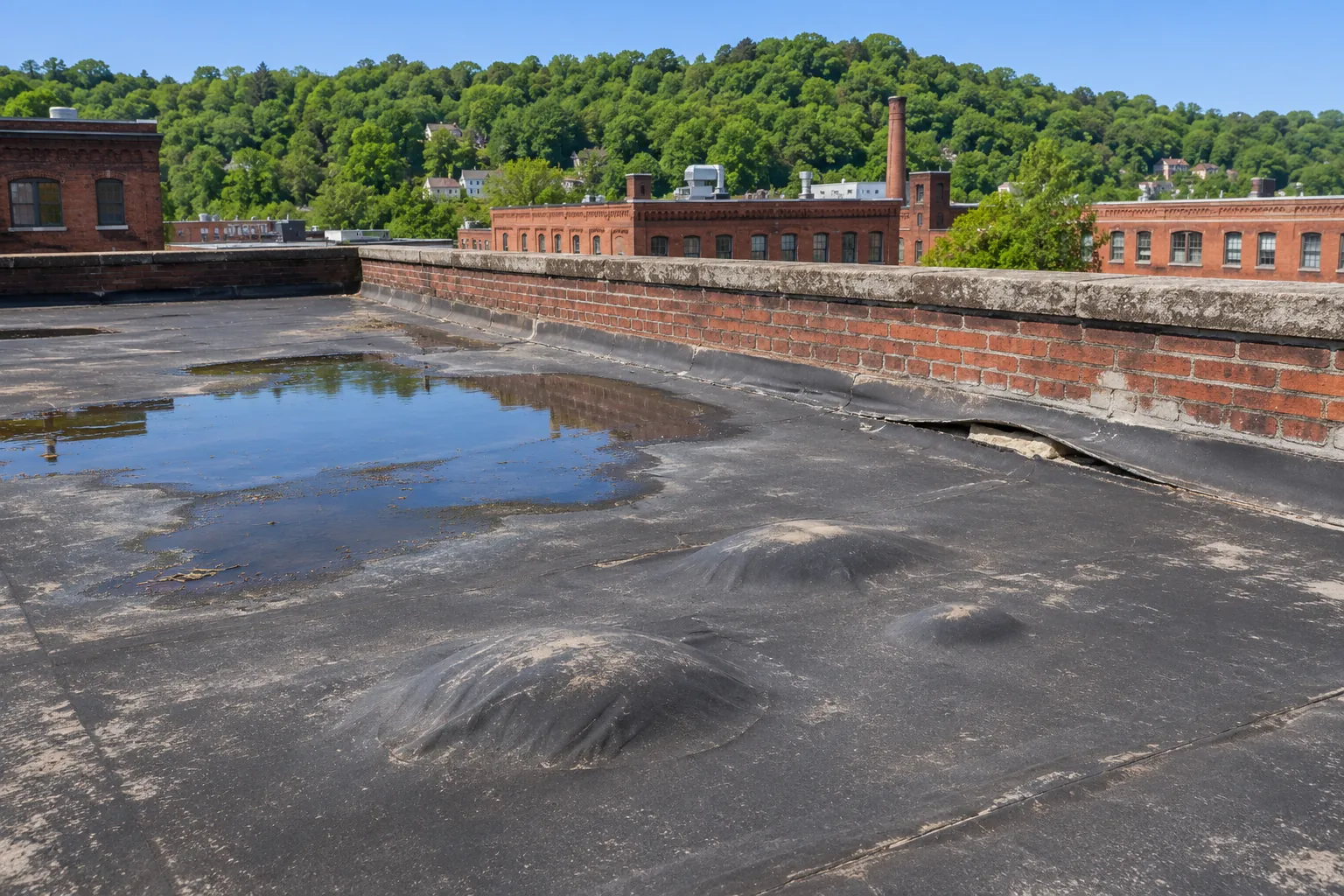
Seam Re-Welds On TPO And PVC
Laps get probed end to end, scrubbed of oxidation, re-welded with hot air, and probed again; sections that refuse to fuse get a round-cornered patch.
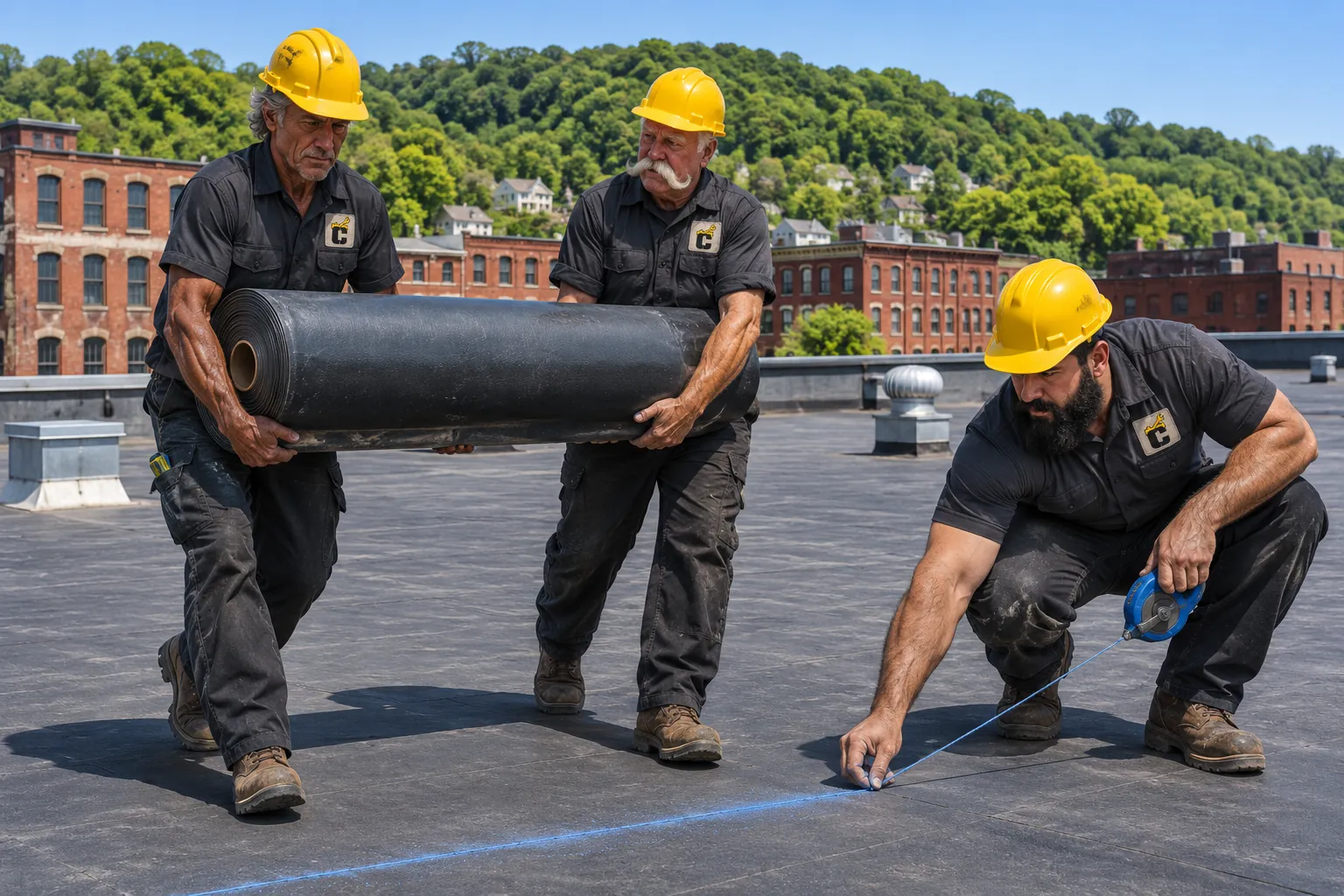
Flat Roof Repair
As a Covington flat roof repair contractor, we fix open seams, punctures, blisters, and ponding areas on TPO, PVC, EPDM, built-up, and modified bitumen roofs.
A Covington flat roof repair contractor looks at how far the damage spreads before anything gets patched. These rows show where most roofs land.
| Roof Sign | Good Fit For Repair | Points Toward Replacement |
|---|---|---|
| Seams | A few open laps that weld or tape back down | Laps failing across most of the field |
| Blisters | Scattered small, firm blisters or a few broken ones | Many blisters with wet insulation under them |
| Ponding | Water held near one drain, curb, or crushed board | Standing water from a sagging deck or bent joists |
| Punctures | Holes near units and walk paths with dry board below | Soft, soaked insulation spread across whole bays |
| EPDM shrinkage | Edges pulling at a few walls and curbs | Sheets shrinking across the entire roof |
Low-slope roofs hide damage well. These pairs connect what shows up inside to what we find on the membrane above it.
Water lands across the room from the nearest curb because it ran along the deck first.
A TPO or PVC lap that never fused, or opened with age, lets water under the sheet.
Sagging tiles appear near a rooftop unit a few weeks after an HVAC service call.
Dropped screws, panels, and tools pierce the membrane around units and service doors.
A damp odor or dark tile shows in one area with no visible drip at all.
Board crushed near a drain bowl holds water that slowly works into old seams.
Each repair matches the membrane already on the roof, so the patch bonds and later repairs still take.
Laps get probed end to end, scrubbed of oxidation, re-welded with hot air, and probed again; sections that refuse to fuse get a round-cornered patch.

Primer and a cured patch with factory tape cover punctures with a wide margin, while split laps get new seam tape and a cover strip.
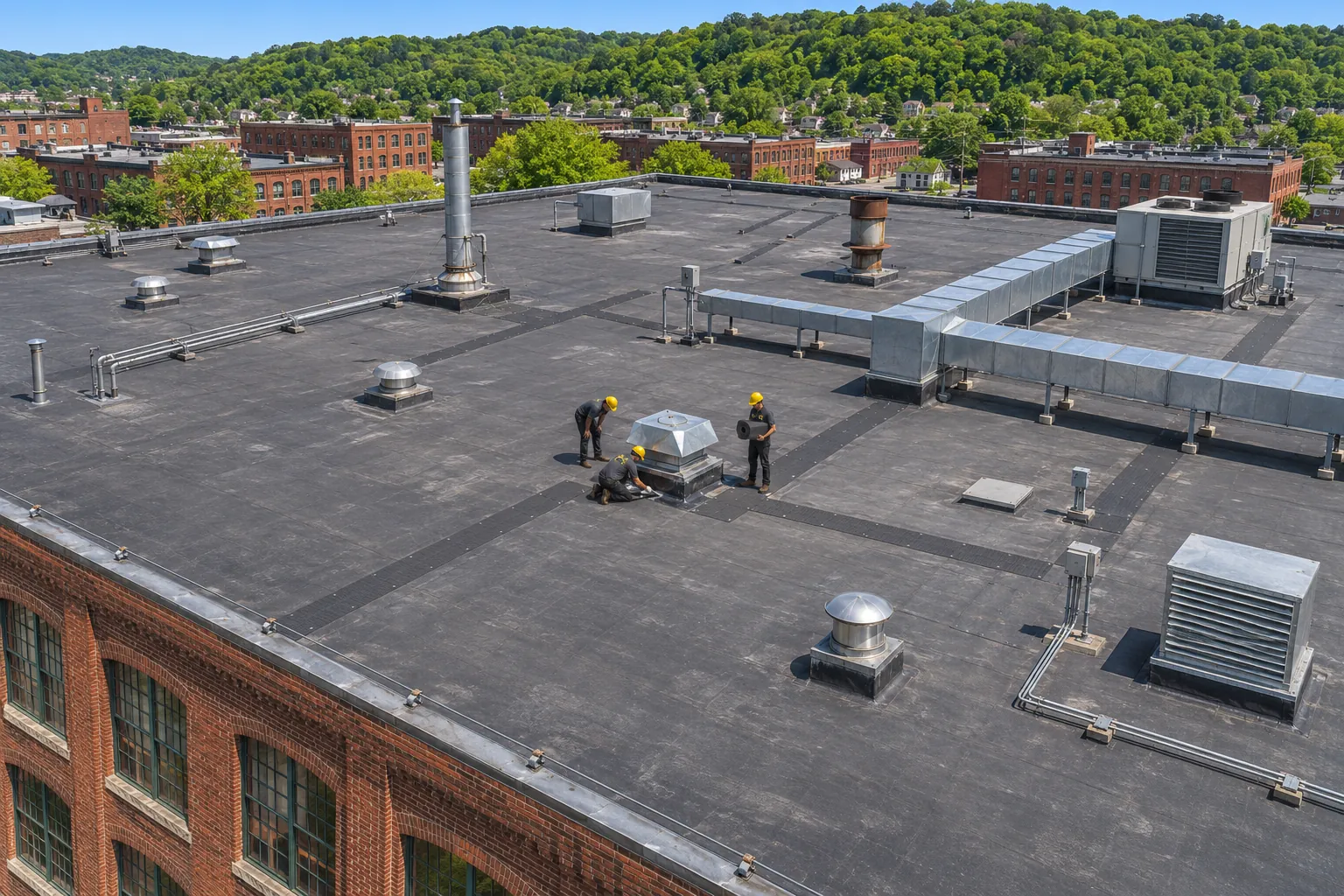
Large or broken blisters are cut, dried, re-adhered, and patched with matching plies; small firm ones stay marked and checked each visit.
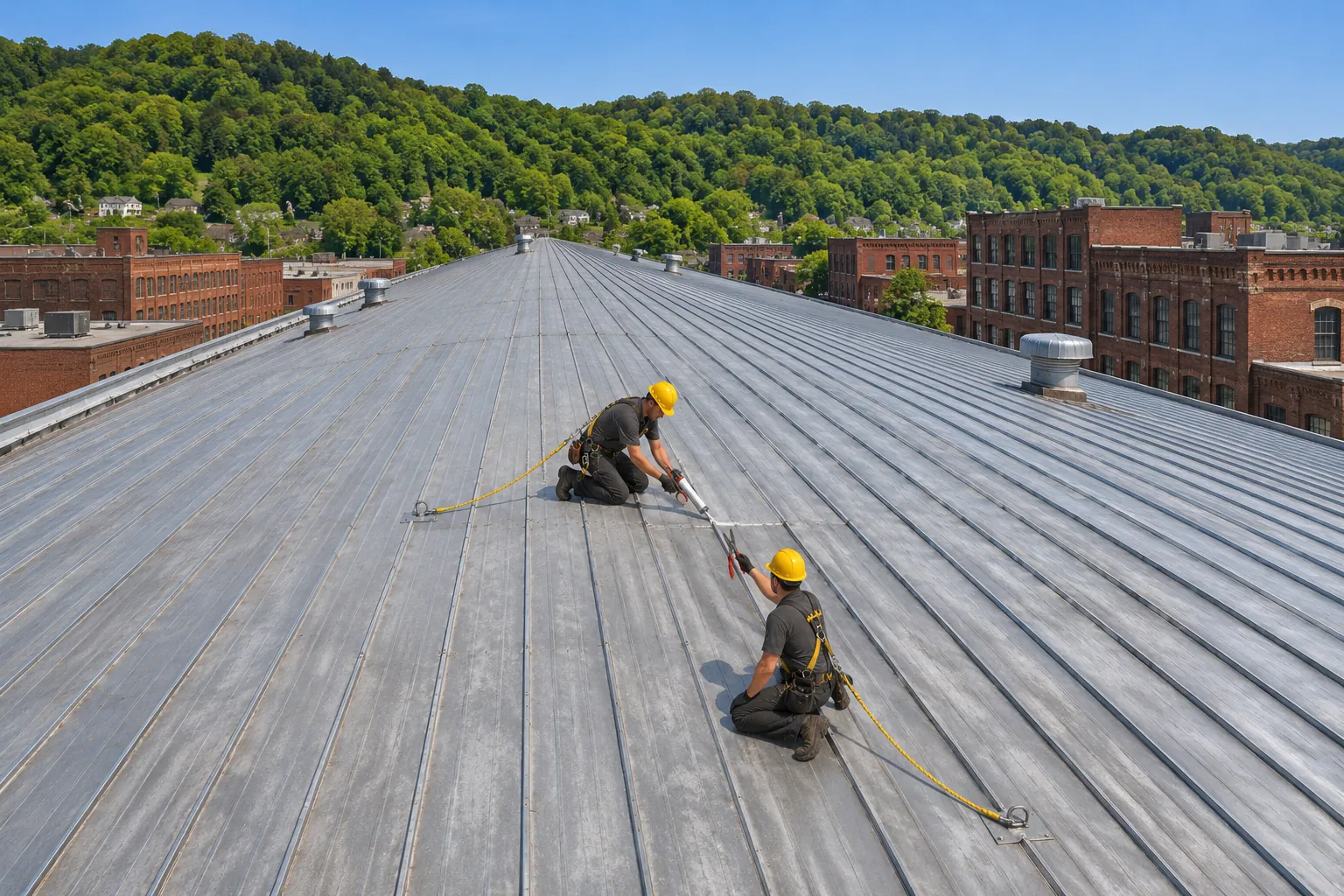
Clearing strainers, resetting a high drain bowl, adding a cricket behind a curb, or replacing crushed board shortens how long water sits.
Targeted flat roof repairs keep a membrane in service while the insulation underneath is still dry.
Closing a lap early keeps water from spreading through more insulation under the field.
Cutting out old caulk and using matching membrane leaves laps that can be heat-welded again later.
Stopping a seam leak ends the cycle of replacing stained tiles in the same office or aisle.
Curb and puncture work around rooftop units is planned so cooling and heating stay on through most of the job.
You pay for the laps, patches, and drain work the roof needs instead of an early tear-off.
Moisture readings logged with each repair show when wet areas start growing, which is when replacement planning begins.
Ponds behind curbs and around drains wear seams faster. Call and tell us where the water sits and how long it stays after rain.
Five decisions take a flat roof from a reported leak to a documented repair.
Seams are probed, curbs and drains checked, and soft spots pressed underfoot to find where water got past the membrane.
A moisture meter or small inspection cut shows whether the insulation is dry, which decides between a patch and a section replacement.
TPO and PVC get hot-air welds, EPDM gets primer and seam tape, and built-up roofs get matching plies over the cut-out area.
Walk paths are padded, debris is bagged, and old caulk is cut from laps so the new weld bonds to clean sheet.
Finished seams are probed again, nearby laps and drains get a look, and photos of each repair go into your roof file.
Flat roofs often need help from these related services when the problem reaches past the membrane.
When a drip shows up far from any visible membrane damage, leak tracing finds the curb, drain, or lap at fault first.
Plant roofs with grease at exhaust fans or expansion joints over production need repairs planned around shifts.
A metal shop beside a membrane office needs each roof repaired its own way and a flashed joint where they meet.
These come up on almost every flat roof we walk.
Most Asked
The lap gets cleaned, dried, and re-welded with a hot-air gun, then probed again along its full length. Older sheets carry an oxidized skin, so the repair area is scrubbed with membrane cleaner first. A section that refuses to fuse gets a heat-welded patch with rounded corners, and earlier caulk repairs are cut out because caulk blocks a weld.
With EPDM primer and a cured rubber patch carrying factory-applied tape, pressed and rolled over the damage with a margin of several inches on every side. Rounded corners resist peeling. Heavily chalked rubber needs a hard scrub first because primer bonds only to clean sheet, and split laps get new seam tape with a cover strip.
Only some of them. Trapped moisture or air expands in the sun and lifts the plies, mostly on built-up and modified bitumen roofs. Small, firm blisters are marked and watched, since cutting them lets water in. Large, growing, or broken ones get cut, dried, re-adhered, and patched, and blisters in walk paths or near drains are handled sooner.
Often, yes, starting with the drain or scupper serving the low spot. Clogged strainers, a drain bowl set too high, and crushed insulation around the bowl cause many ponds. Fixes include clearing leaders, resetting the bowl or adding a sump, building a cricket behind a curb, or adding a drain. A sagging deck needs an engineer’s look first.
The insulation under the hole is checked first, through a small inspection cut if the board feels soft, and wet board is replaced. Then the membrane is cleaned and primed or prepared for welding, and a matching patch goes on with a wide margin. Walkway pads between units and service doors cut down on repeat punctures.
Send the roof type and where water shows up inside, and we will set up a free flat roof inspection and estimate.