
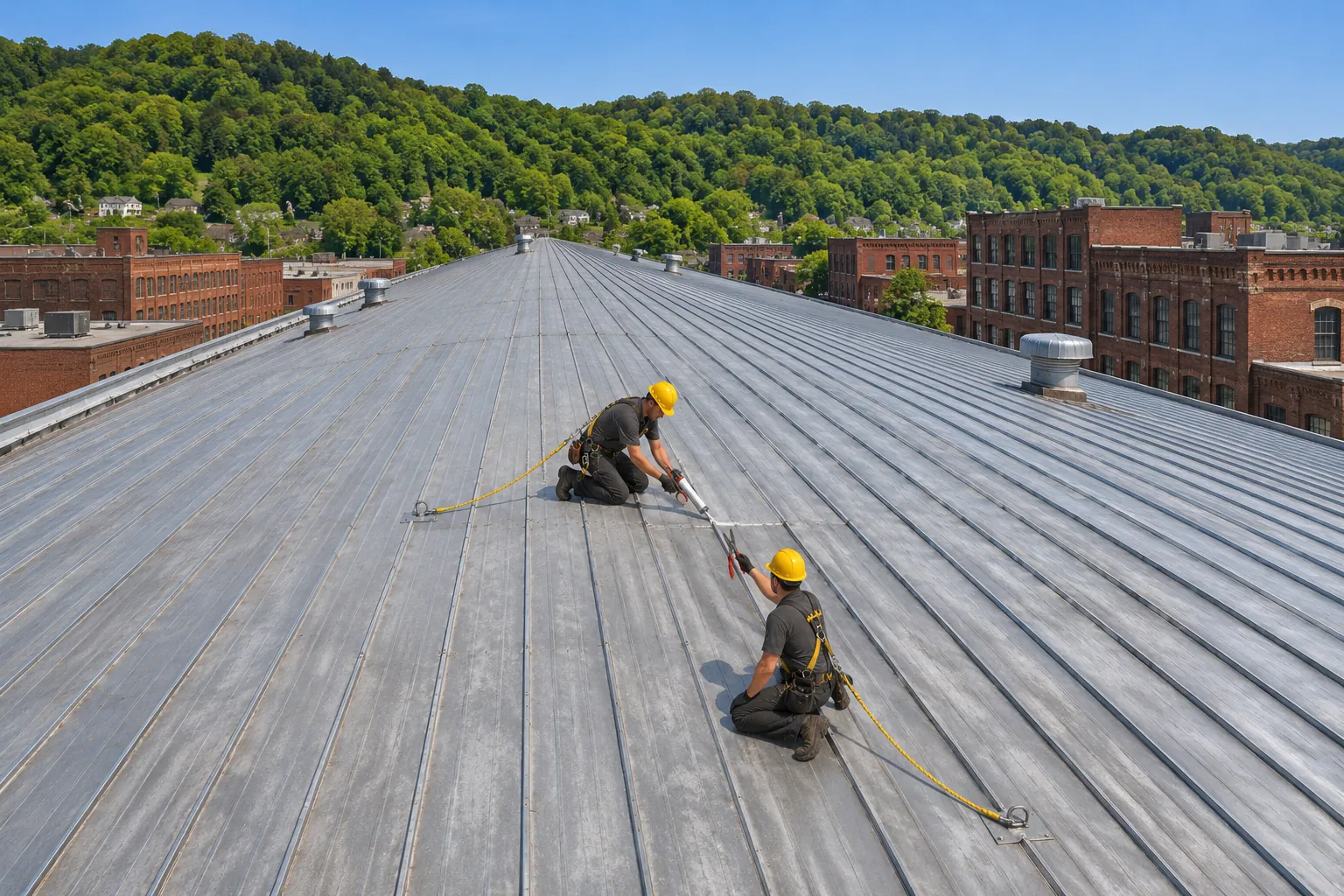
Flat Roof Repair
Seams over wet board get the insulation replaced first, then a matching patch applied once the membrane is dry.
Flat roof repair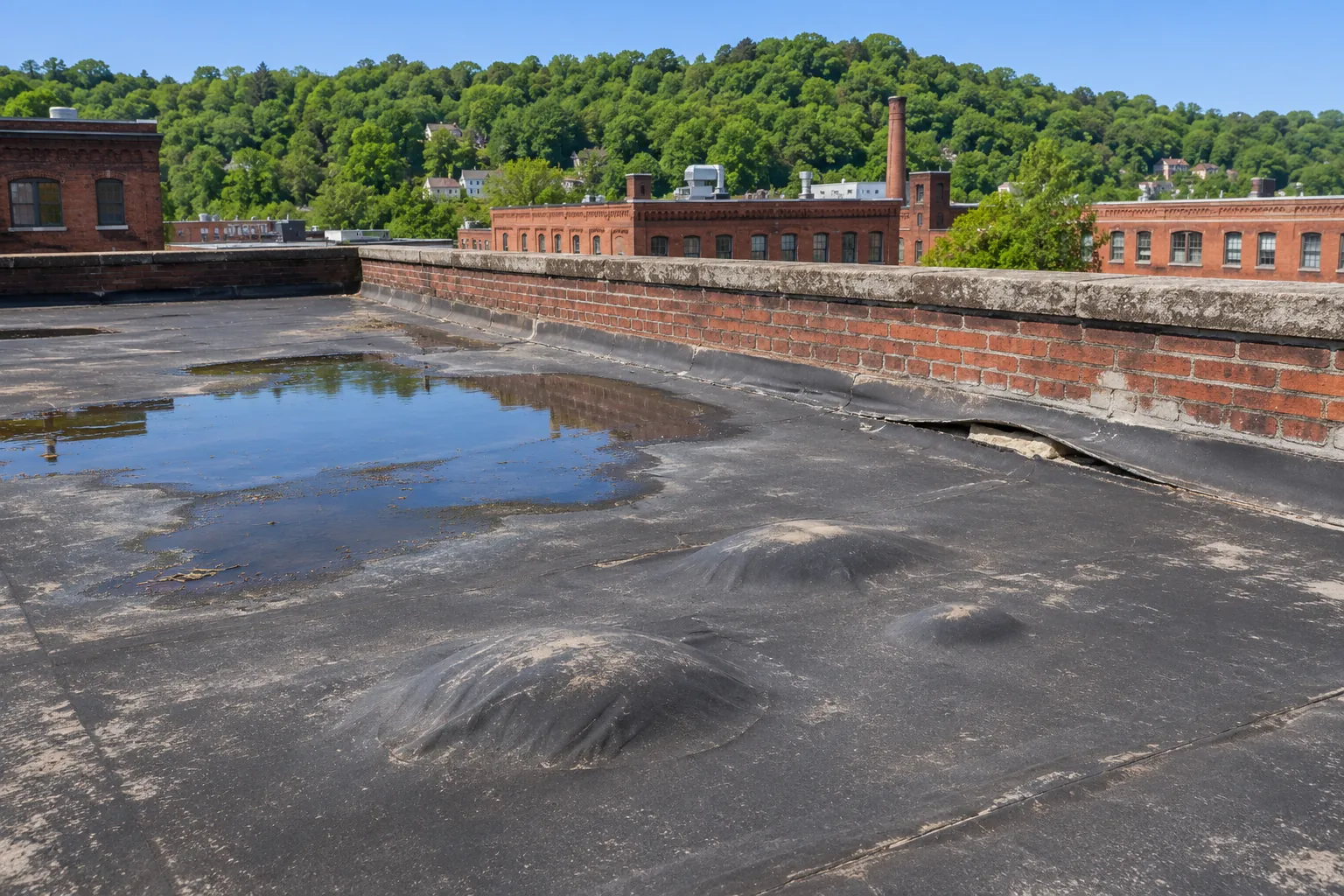
Bellevue, KY
As a Bellevue commercial roof repair contractor, we fix seams, gutters, and flashing on business buildings where river fog and heavy dew keep roofs wet into the morning.
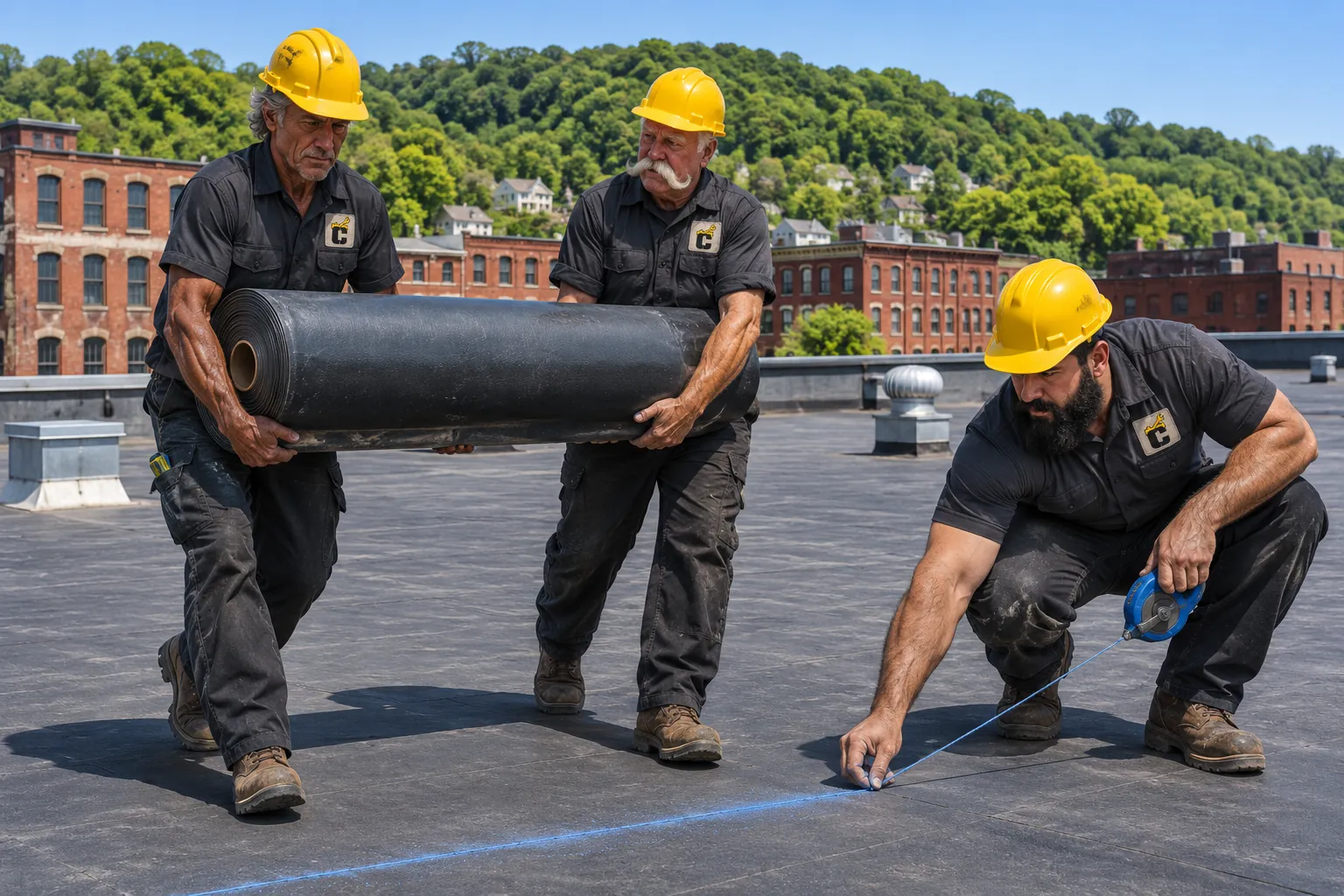
A Bellevue commercial roof repair contractor plans around wet mornings. Fog off the Ohio River and heavy dew keep roof surfaces damp into midmorning, and most permanent primers, seam tapes, and sealants need a dry surface.
Each product lists a dew point limit, so permanent work starts once the surface dries and the temperature sits safely above the dew point.
Moisture drives most repair calls here. These pairs link what owners notice inside to the damp details above.
Water drips even though no rain fell, usually on cool mornings.
Moisture works into a lap that opened slightly, then shows up as a drip once enough collects.
Rust-colored streaks run down the wall below a gutter.
Zinc coating wears away, seams split, and water overflows behind the trim.
A damp odor sits in the rooms along a shaded wall.
Algae holds moisture against the sheet near parapets, hiding laps that need attention.
Repairs timed to dry surfaces bond the first time, which matters on roofs that spend many mornings wet.
Primers and tapes go on dry, clean membrane, so the repair holds through the next damp season.
Primed and resealed gutter seams carry water to the downspouts again instead of over the edge.
Fixing gutter overflow and wall flashing ends the streaks and damp plaster along outside walls.
Closing seams over wet insulation lets the affected area dry out once the source is gone.
Work done inside product limits avoids patches that peel and need redoing in spring.
A scan of wet areas under old seams shows which sections need board replaced and which only need sealing.
Every service here is adjusted for damp mornings and river-facing metal in Bellevue.
Seams over wet board get the insulation replaced first, then a matching patch applied once the membrane is dry.
Flat roof repair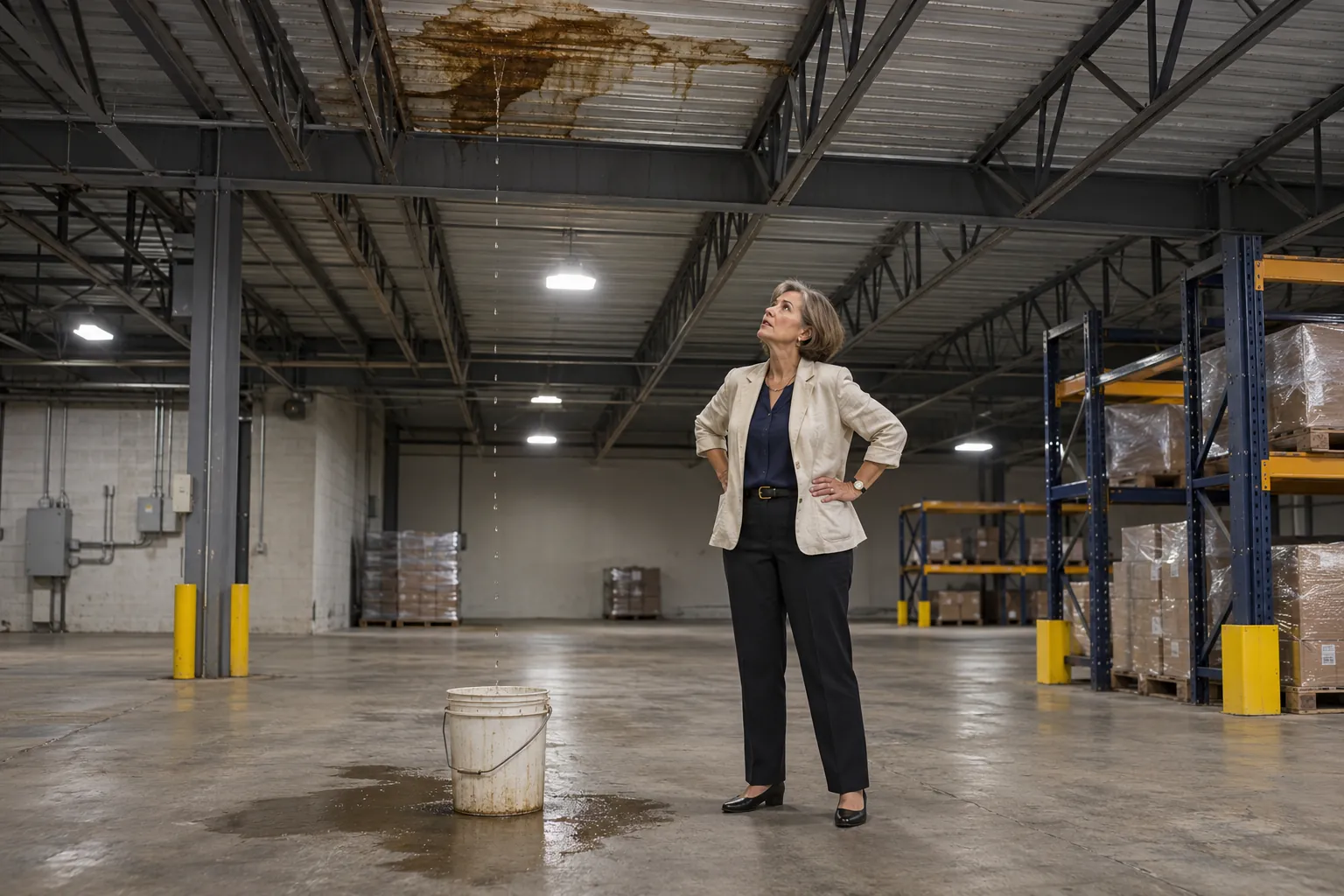
Panels and gutters facing the river get rust primed with zinc-rated primer and laps resealed with fresh tape.
Metal roof repair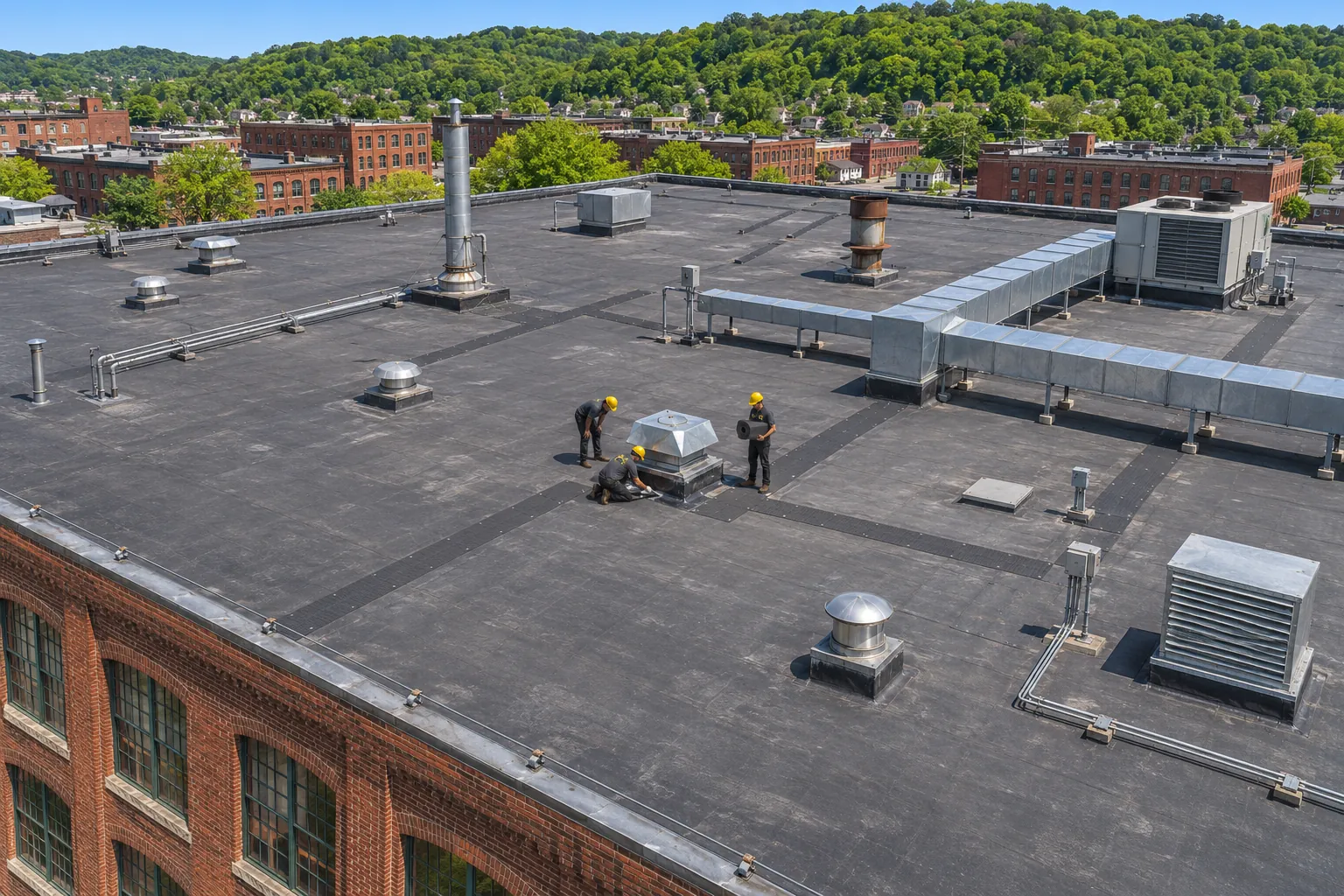
Drips that show up after dry nights get traced to the seam or flashing that lets dew collect.
Leak repair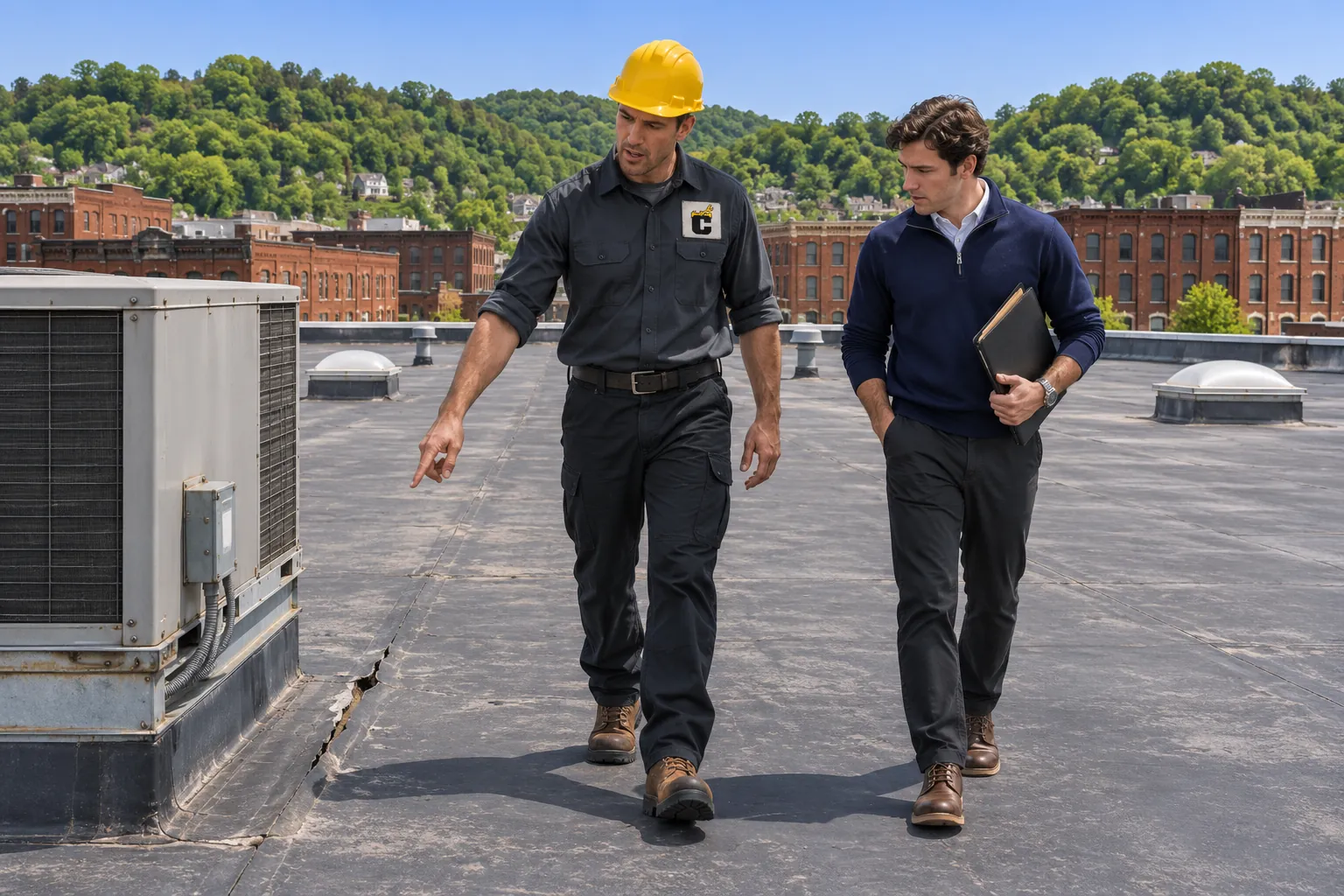
Larger buildings get moisture scans to find wet sections before repairs are scheduled for dry stretches.
Industrial roof repairThat points to moisture getting under a seam. Call and describe where it drips and what time of day it starts.
Four decisions keep repairs on damp roofs within what the materials allow.
Seams, gutters, and parapet flashing are checked, and shaded areas are cleaned so laps under algae can be seen.
Surface moisture and the dew point are checked before primer opens, and work waits until the membrane dries.
A moisture meter shows whether old seams let water into the insulation, and wet board is replaced before patching.
Gutter seams, laps, and flashing are sealed, then photographed with notes on the conditions during the work.
Is your Bellevue building near the river or up the hill? Either way, we repair commercial roofs in every town listed; for other areas, call us or send us a message.
Moisture and timing questions owners ask most here.
Most Asked
Morning fog and heavy dew keep roofs wet into midmorning, and most permanent repair materials need a dry surface. Primers, seam tapes, and sealants each list a dew point limit, so repair crews start once the surface dries. For Bellevue repair permits, the state’s county sheet points owners to Campbell County’s building inspectors.
Constant moisture wears away the zinc coating that protects the steel, and white rust forms first. Left alone, it turns to red rust and splits seams. Repair means scrubbing the white rust, priming with a primer made for zinc surfaces, sealing seams, and replacing sections where the bottom has thinned.
Yes, before any repair near it. Algae holds water against the membrane and hides laps that have started to open. Cleaning the area shows the condition of the seams underneath, and trimming back whatever shades that part of the roof helps it dry between rains.
Yes, with wet-surface mastic or tape that grabs damp membrane. That stopgap holds water out until the surface dries, then it comes off so a permanent patch can bond to clean sheet. Both visits are logged so the temporary repair gets replaced on schedule.
A moisture meter checks suspect spots, and an infrared scan after sunset shows larger wet areas because damp board holds heat differently. A small core cut confirms the reading. Wet board under a seam gets replaced before the lap is repaired, or the trapped water keeps feeding the leak.
Where water appears inside, whether it happens after rain or on dry mornings, and roughly how old the roof is. Photos of gutter rust or wall streaks help too, along with the location of the roof hatch or ladder and any notes on past repairs to the same spot.
Tell us when the drips show up and where, and we will set up a free roof inspection and estimate for your Bellevue building.